By Silvano Alpini
During my boarding school years, I was more fascinated by Bertolt Brecht and Pier Paolo Pasolini than by the classics. I sought a theatre capable of questioning society, exposing its contradictions and challenging power.
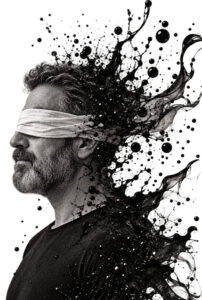 That passion led me to act in The Life and Death of Pier Paolo Pasolini, playing several roles, including the Black Shadow of Power, symbolising the forces that sought to suppress the writer’s freedom. It was a defining experience: I wanted theatre to be more than entertainment, a stage capable of giving a voice to the voiceless. Because on those dusty floorboards, even those living on the margins can become giants.
This belief has guided my artistic journey and led me to become one of the founders of the Masaccio Cultural Association, where I work as artistic director, theatre director and playwright. For me, directing means above all working with people, understanding their potential and helping them find their own expressive language. I explored psychological suffering through Alda Merini, parent-child relationships in Listen to Me Even If You Cannot Hear My Voice, whose premiere was supported by Vladimir Luxuria, and Aldo Moro in Moro, the Man in the Final Days of His Life. I have also created productions addressing violence against women. Different stories, united by the need to reveal what we too often choose to ignore.
I have always believed that passion alone is not enough. Working with people, especially those who struggle to express themselves, requires preparation and responsibility.
 I completed Master’s programmes in Theatre Pedagogy and Sensory Theatre, obtained a qualification from Teatro della Limonaia and studied TeDaVi with Alessandro Riccio for four years.
I explored the teachings of Stanislavski, Stella Adler and Uta Hagen, also attending psychology training courses through my collaboration with Atracto. I am currently pursuing further studies in theatre work with autistic people, particularly children and adolescents. I see these qualifications not as achievements to display, but as tools to honour the trust of those who place themselves in my care.
For fifteen years I have collaborated with Atracto, an inclusive theatre group that has given profound meaning to my work. Here, everyone contributes what they can: a voice, a gesture, a glance, a presence. There is no single model of body or expression. I have learned that what seems like a difficulty in everyday life can become a creative opportunity on stage.
A hand without strength can find a voice; a walking frame can become an extension of the body. This does not mean denying limitations, but refusing to define people by what they cannot do.
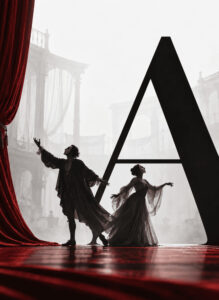 Every encounter brings emotion, every small achievement is a victory. The value of this theatre lies not in the perfection of a performance, but in everyone’s opportunity to feel part of something. Because the stage does not grant space: it recognises everyone’s right to occupy it.
At a certain point, I felt that some stories needed a different language. This led to Frost in the Heart, my first book, combining autobiographical elements with a focus on childhood wounds. Above all, I wrote for children, silent witnesses and victims too often forgotten. I had the pleasure of presenting it alongside my friend, journalist Enzo Brogi, who believed in the story from the beginning. Two more novels are due in 2027: A Woman at War, set at the end of the Second World War, and The Man Who Came from Afar, about a nameless man caught in life’s contradictions. Three different works, united by the desire to tell stories of vulnerability and unheard lives. For me, writing and theatre fulfil the same need: to give a voice to silence.
Today I often think back to that boy who was afraid of others and who discovered, upon entering a theatre, that he could face his insecurities. He could never have imagined directing productions, founding an association, writing books and dedicating himself to inclusive theatre. Yet everything began there. I believe in a theatre open to everyone, regardless of age, social background or disability. A theatre that welcomes without compromising quality, teaches without imposing and listens before asking others to speak. I continue studying, writing and working with people because every encounter reminds me why I began. I do not know whether theatre can change the world, but I know it can change how people see themselves and how others see them. Theatre gave me a voice when I was afraid to use it. I chose to dedicate my work to those who are still searching for theirs.