By Our Editorial Staff
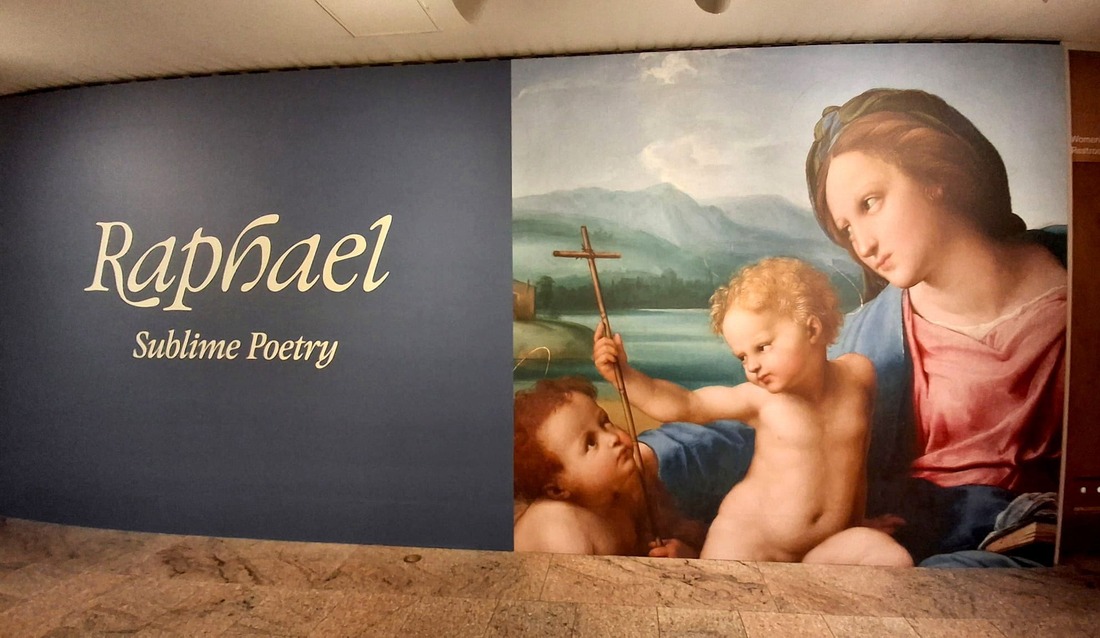
The major exhibition Raphael: Sublime Poetry at New York’s Metropolitan Museum of Art has come to a close, leaving behind an extraordinary legacy of success. For weeks, visitors from across the globe flocked to one of the world’s most prestigious museums to admire the masterpieces of the Renaissance genius Raphael. Among them was a work of particular significance for Umbria and the city of Città di Castello: the Processional Banner of the Holy Trinity.
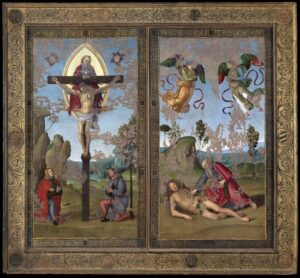
The presence of this remarkable artwork in such a prestigious exhibition represented far more than a simple museum loan. It offered an exceptional opportunity to showcase one of Italy’s most treasured artistic works on the international stage, bringing the name of Città di Castello to a vast and highly qualified audience.
Dedicated to Raphael’s entire artistic journey, the exhibition featured more than two hundred works drawn from some of the world’s most important collections. Special attention was given to the banner preserved in the Municipal Art Gallery of Città di Castello, which was presented as the artist’s first fully autograph painting. Its inclusion attracted considerable interest from scholars, critics, and visitors alike.
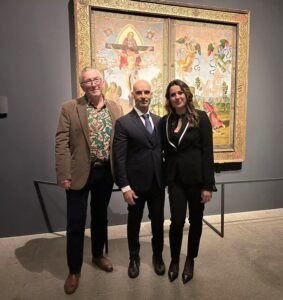
Dating to around 1499, the Processional Banner of the Holy Trinity is considered one of the most significant testimonies to Raphael’s early artistic development. It is also the only movable work by the master still preserved in Umbria and the sole Raphael painting remaining in Città di Castello. A recent restoration project, carried out through a collaboration between the Municipality of Città di Castello, the Regional Superintendency for Archaeology, Fine Arts and Landscape of Umbria, the Italian Central Institute for Restoration, and the Metropolitan Museum, restored the work’s original clarity and highlighted its extraordinary artistic value.
The conclusion of the exhibition also provided an opportunity to reflect on a project that brought together local institutions, national cultural bodies, and one of the world’s leading museums. A result welcomed with great satisfaction by the Mayor of Città di Castello, Luca Secondi, and the Councillor for Culture, Michela Botteghi.
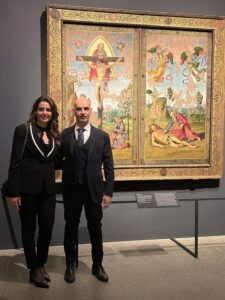 “The presence of Raphael’s Banner at the Metropolitan Museum, within an exhibition destined to become a landmark in Raphael studies, represented the culmination of an important enhancement and conservation project developed in collaboration with the Superintendency and the Central Institute for Restoration,” they stated. “The restoration returned the work to its full readability and enabled further research, confirming its exceptional artistic and cultural significance.”
Particularly important was the attention devoted to the artwork by exhibition curator Carmen C. Bambach, one of the world’s foremost experts on the Italian Renaissance. Having closely followed the scientific restoration project, she played a key role in highlighting the significance of the banner within the New York exhibition.
Yet perhaps the most significant achievement was another. For months, the name of Città di Castello appeared alongside Raphael’s in the Metropolitan Museum’s official communications, exhibition catalogues, scholarly publications, international media coverage, and visitor itineraries.
It was an extraordinary showcase that brought global attention not only to the masterpiece itself, but also to the territory that has preserved it for centuries.
 “The exhibition in New York significantly increased awareness of the Banner among an international and highly qualified audience,” Secondi and Botteghi further emphasized. “At the same time, it provided an exceptional opportunity to promote both the museum and the wider territory of Città di Castello, which for months was associated with one of the world’s most important cultural events.”
The Metropolitan Museum experience demonstrated how the enhancement of cultural heritage can become a powerful instrument for territorial promotion. The Processional Banner of the Holy Trinity returned to Città di Castello enriched by renewed scholarly attention, an important chapter in its history, and an unprecedented level of international recognition.
A result that is a source of pride for the entire community and a reminder that the masterpieces preserved in Italy’s museums can serve as outstanding ambassadors around the world, carrying with them not only the universal value of art, but also the identity, history, and culture of the places from which they come.
Info: www.comune.cittadicastello.pg.it