By Simone Bandini
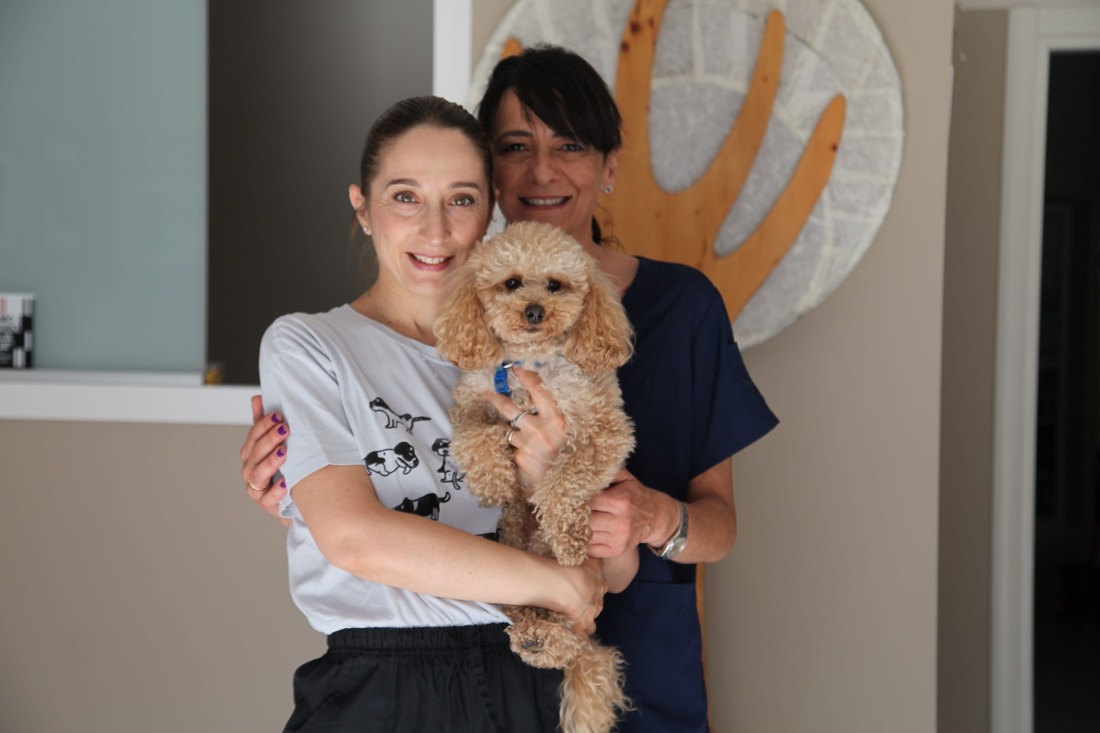
In the new, bright clinic in Bibbiena, doctors Maruska Fossi and Sabrina Lorenzini, veterinarians, welcome animals and owners every day with competence, availability and a strong bond with the inhabitants of the area. Between visits, samples and consultations, the portrait emerges of a growing professional reality, capable of combining veterinary medicine, attention to animal welfare and community service.
The move to the new headquarters in Bibbiena, which took place on the first of March, represented an important step for the two veterinarians. The larger and more functional spaces, better internal organization, greater visibility and ease of parking have made work more efficient and reception better.
In fact, the clinic offers complete assistance for pets, especially dogs and cats. Maruska Fossi and Sabrina Lorenzini work permanently in the structure, supported by colleagues who specialize in various sectors, from oncology to orthopedic surgery, from ophthalmology to ultrasound.
In addition to basic medicine, there are specific skills such as animal behaviour medicine, an area in which Maruska herself operates, and nutrition, with the support of Dr. Lorenzini. The clinic also has digital radiology, basic surgery and an in-house laboratory capable of providing blood tests in about half an hour, ensuring fast times and quick responses.
Alongside their clinical activity, the work of the two professionals is deeply intertwined with the territory; Maruska Fossi is in fact health director and contact person of the Casentino Intermunicipal Kennel, a position that she considers a source of pride and an integral part of her veterinary mission. In addition to the management of the dogs housed in the facility, the clinic also provides first aid to stray cats rescued thanks to the work of ENPA Casentino and the Union of Mountain Municipalities of Casentino, intervening in often complex and urgent situations.
The issue of stray dogs remains central. If for dogs the situation in the Casentino area has improved significantly over the years, there are still worrying episodes, such as the recent abandonment of three Maremma shepherd puppies without a microchip. For cats, however, according to veterinarians, the phenomenon is still largely out of control. Alongside the recognized feline colonies followed by volunteers and administrations, many spontaneous situations of uncontrolled reproduction persist, with obvious consequences especially in the summer months, including road accidents and requests for help. In this sense, more precise legislation for cats could also be a concrete help in preventing the phenomenon.
The clinic deals exclusively with pets, especially dogs and cats, while also guaranteeing first aid to some unconventional animals, such as rabbits, ferrets and turtles for example, which are then referred to dedicated specialists. But in addition to treatment, the doctors also pay great attention to prevention. In the event of a new arrival in the family, they recommend immediately scheduling an initial visit, accompanied by a basic screening, including stool examination, to protect both the animal and the domestic environment and people’s health. This is where the vaccination plan and a constant monitoring process begin.
Prevention, they explain, is not only about the welfare of the individual animal but is part of a broader vision of public health. It is the principle of ‘One Health’, according to which animal, human and environmental health are closely connected. For this reason, veterinarians recommend periodic check-ups throughout the year, with at least two annual visits even for young animals and, after the age of eight, a blood screening associated with a visit, at least once a year.
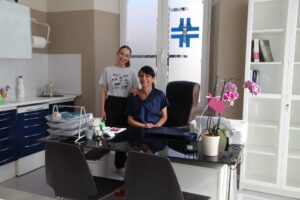
Behind the professionalism and organization there is also a personal story made up of friendship, roots and shared passion. Sabrina Lorenzini says she has known Maruska for over twenty years, since she was preparing for the university admission test. Since then, their relationship has turned into a deep bond that is now also reflected in their daily work. For Sabrina, practicing in Casentino also means giving something back to the land where she was born and raised.
The same feeling animates Maruska, who identifies in the union with Sabrina one of the forces that allow her to bear the emotional weight of an intense profession such as veterinary medicine. Alongside the strong attachment to the Casentino, the care of the animals in the area and the commitment to the kennel, there is the awareness of carrying out a profession that coincides with one’s vocation (a sense of work that the German sociologist Max Weber summarized in the term ‘Beruf’, ed.). A passion that therefore requires sacrifices, availability after hours and a constant presence even in emergencies, but which continues to give meaning and value to every day.
In the story of the two doctors, an idea of veterinary medicine takes shape that goes far beyond the clinic: a work made up of knowledge, dedication and responsibility, where the care of the animal is intertwined with that of people and the community.
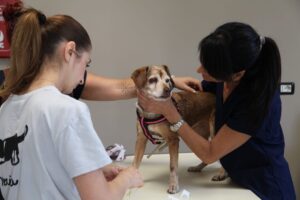
In this new headquarters in Bibbiena, Maruska Fossi and Sabrina Lorenzini confirm their desire to be a point of reference for the territory, with a careful look not only at the health of the animals, but also at the deep bond that unites the latter to the families who welcome them.
Info: Clinica Veterinaria Dott. Maruska Fossi, Via Umbro Casentinese 102, Bibbiena (Ar) / email: maruska.fossi@alice.it / Tel. 349 5052678. Dal lunedì al venerdì su appuntamento dalle 9.00 alle 13.00 e dalle 16.00 alle 19.00. Per aggiornamenti seguite anche le loro pagine facebook e instagram