By Our Editorial Staff
The Association of Umbrian Camaldolese Paths was the point of reference for the arrival in Gubbio of the ‘Cod and Stockfish Festival’ (9,10,11 October 2026), an event that finds its inspiration in the culture of the paths – those paths that cross the villages of Umbria and that preserve a centuries-old history made up of meetings, exchanges and traditions deeply rooted in local communities. Among these traditions, those related to cod and stockfish occupy an important place, foods that for centuries have represented a precious resource for the populations of the hinterland.
 Their diffusion has also been favored by religious prescriptions which, starting from the time of the Council of Trent, have consolidated the habit of consuming lean dishes during the periods of Lent, on the eves of the main Christian holidays and on Fridays of the year. In territories far from the sea, cod and stockfish thus became particularly popular foods, permanently entering the local gastronomic traditions and contributing to the construction of a cultural identity that is still handed down from generation to generation.
The paths, in this sense, do not only represent a form of slow tourism, but also propose a lifestyle based on the rediscovery of time and traditions. And what better example than the patient wait needed to desalinate cod or to rehydrate stockfish? Three days of care and attention that teach the value of slowness, respect for natural times and shared preparation.
In an era dominated by speed, these practices remind us how slowness can still be a precious resource, capable of preserving the memory of communities and continuing, as the saying goes, ‘to bring good advice’.
We often wonder what is the difference between cod and stockfish?
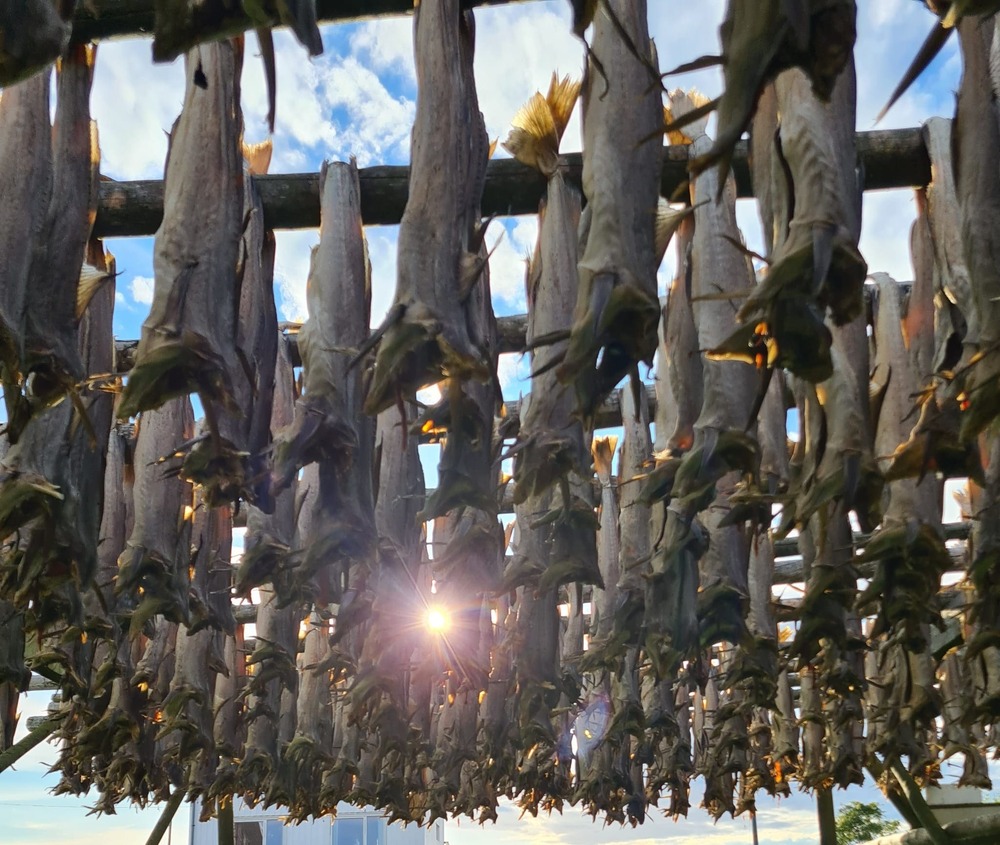
First of all, it must be said that it is always Norwegian cod. The former is preserved in salt while the latter is dried in the cold wind of northern Norway. Umbria was chosen as the venue for the Cod and Stockfish Festival because it uniquely represents the encounter between two great Italian gastronomic traditions. In fact, in this region coexist a consolidated culture of cod, deeply rooted in popular cuisine, and a significant tradition of stockfish, nourished by the centuries-old relations with the nearby Marche. Few territories can boast such a strong and authentic presence of both preparations of preserved cod. Umbria therefore constitutes a natural cultural bridge between two complementary gastronomic heritages. For this reason, a more suitable and representative venue to celebrate cod and stockfish together could not have been imagined.
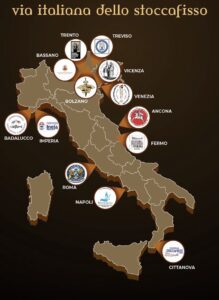 The Italian Stockfish Route, born in Portonovo in 2015, brings together the Italian brotherhoods and territorial communities that preserve, defend and pass on the different gastronomic traditions related to stockfish. From north to south, from Bolzano to Sicily, the route crosses Veneto, Trentino, Marche, Friuli Venezia Giulia, Liguria, Lazio, Campania and Calabria, enhancing the multiple regional interpretations of this extraordinary food heritage.
Each territory preserves its own recipe, the result of history, local resources and customs handed down from generation to generation. These diversities represent a cultural wealth to be preserved and disseminated, while respecting local identities.
The confraternities and member associations constitute a real community of practice, united by the common commitment to safeguard the knowledge, knowledge, rituals and traditions related to stockfish. Together they collaborate in the candidacy of the Italian Stockfish Traditions for recognition as an intangible cultural heritage of humanity at UNESCO, with the aim of protecting and transmitting to future generations a heritage that belongs to the cultural identity of numerous Italian communities.
The international candidacy of stockfish traditions as Intangible Cultural Heritage of Humanity has its roots in 2012, in Bergen, and has taken on a more structured dimension starting from 2023, with the establishment of an international working group representative of the entire drying supply chain.
This does not mean, of course, excluding cod intended for salting, which gives rise to cod, nor the cultural and gastronomic traditions linked to it. However, it was necessary to make a clear distinction, since the history of stockfish has older and deeper roots than that of cod. Stockfish has in fact represented a real currency of exchange for centuries, favouring international commercial and cultural relations from the Middle Ages onwards.
Thanks to these exchange networks, the preserved cod has been able to reach communities even far from the sea, where local traditions have been developed and handed down that still constitute a heritage of great value today.
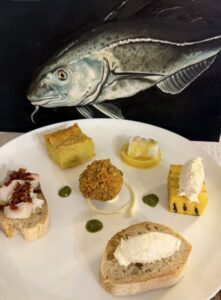
In this context, the encounter between cod and stockfish in Umbria represents an opportunity for dialogue between similar gastronomic cultures. At the table, diners will be able to appreciate and taste both cod-based and stockfish-based recipes, rediscovering the richness of two traditions that, while following different paths of cod conservation, share a common history made up of exchanges, encounters and territorial identities.
But what will be the future of cod and stockfish?
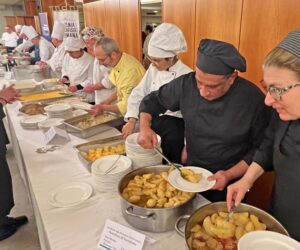
On October 10th, in Gubbio, an important conference will be held that will bring together the communities of practice linked to the traditions of stockfish. On this occasion, the University of Masons, guardian of the tradition of ‘Baccalà alla Ceraiola’, will meet the realities that represent the cultural heritage of stockfish.
The heart of the event will be a round table in which the participating brotherhoods and associations will discuss the future of traditions related to both cod and stockfish, sharing experiences, perspectives and enhancement projects.
Gubbio represents an ideal and neutral venue for this meeting: a city that does not claim the primacy of one recipe over another and that precisely for this reason offers the perfect context for an open and constructive dialogue. It will be a moment of authentic confrontation, in which the different communities will be able to share their heritage of knowledge and traditions, helping to strengthen a shared vision for the future of these important food cultures.
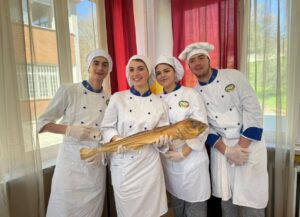
During the three days of the Cod and Stockfish Festival it will be possible to taste authentic gastronomic excellence in the ten participating restaurants, which will offer menus entirely dedicated to cod and stockfish.
However, it will be essential to book in advance, because chefs will be called upon to make high-quality preparations and it will not be easy to satisfy all last-minute requests. The Festival, in fact, is not a festival, but a great event of haute cuisine, where tradition, gastronomic culture and culinary research meet.
The participation of the Italian food and wine brotherhoods linked to cod and stockfish will make the experience extraordinarily rich and engaging. It will be a unique opportunity to discover different interpretations of these symbolic products of the Italian tradition, in a context that promises to be not only extremely appetizing, but also unrepeatable.
The restaurants that will participate are: La Taverna del Lupo, Ristorante dei Consoli, Ristorante Conte Fabiani, Officina dei Sapori, Ristorante Federico da Montefeltro, Al Casellino Ristorante e Pizzeria, Ristorante La Balestra, Locanda Ducale and Pizzeria Bella Ischia.
The participating regions will instead be Trentino with the Stofiss dei Frati, Alto Adige with the Stockfischgröstl, Veneto with the creamed cod and the Vicenza-style cod, Liguria with the Brandacujun, the Marche with the Anconitana stockfish, Campania with the Neapolitan stockfish, Lazio with the cod and chickpeas, Calabria with the stockfish salad, Sicily with cod alla ghiotta. Across the border, then, the countries of Bergen with Lutefisk and Finnmark with grilled stockfish will take part in the event from Norway.
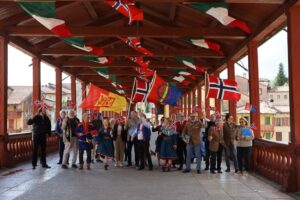
The Cod and Stockfish Festival is proposed as a sustainable event and reminds you that you can also reach Gubbio on foot, following the Camaldolese Paths, by bicycle with the track of the local Granfondo, by bus with Busitalia services, together traveling with car sharing. Because cod is eaten in company!
Info: Presidente A.S.D – A.P.S Cammini Camaldolesi Umbri, Emanuele Luchetti / tel. 330 522707. Email: info@camminicamaldolesiumbri.it / camminicamaldolesiumbri@pec.it
International Stockfish Society / Tel/Whatsapp: 393 9106080 / stockfishsociety@gmail.com / www.stockfishsociety.org