By Paola Butera
In the industrial and artistic landscape bridging the 19th and 20th centuries, the name Daria Rubboli shines with the same iridescent splendor as her celebrated majolica. She was not merely a witness to her time, but a true pioneer: a woman capable of transforming a complex technical legacy into an empire of international prestige, becoming a symbol of resilience and female entrepreneurial excellence.
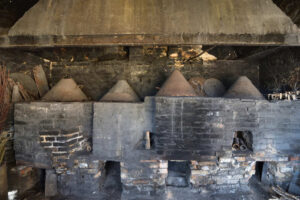
Born in Fabriano in 1852 and already skilled in the ceramic arts, Daria chose Gualdo Tadino not only as a place of the heart but as fertile ground for her ambition. Alongside her husband, Paolo Rubboli, she mastered and perfected the secrets of the lustre technique—an ancient and difficult art requiring absolute mastery over kiln temperatures.
Daria’s true mettle emerged in 1890 when, following Paolo’s sudden death, she found herself alone at the helm of the company with three young sons: Augusto, Lorenzo, and Alberto. In an era that offered little protection to women, Daria demonstrated an extraordinary managerial intelligence.
In 1896, seeking to formalize a new union before God while protecting her children’s inheritance, she chose the path of a “secret” marriage celebrated at dawn in the chapel of the Rocca Flea. The union remained strictly religious with no civil effects: a strategic move that allowed her to safeguard the integrity of the Rubboli firm, preventing the estate from being dispersed among the descendants of her new spouse. This choice, painful yet lucid, guaranteed the survival of the workshop and the future of her boys.
Under her direction, the company did not merely survive; it triumphed. The pinnacle of public recognition arrived in 1899 at the Umbrian General Exhibition, where Daria was awarded the Gold Medal for Industrial Merit in Iridescent Ceramics. This prize was not just a tribute to aesthetics, but a seal of approval on her ability to manage elite craftsmen and innovate production processes.
 Daria deserves credit for balancing the historicism of 19th-century majolica with the emerging Liberty (Art Nouveau) trends, constantly seeking greater product functionality without ever betraying the magic of metallic reflections.
The passing of the torch to her sons, Lorenzo and Alberto, in the 1920s marked the birth of the Società Ceramica Umbra, yet Daria’s protective shadow and critical spirit never left the company. Her ability to “watch over the fate of the enterprise” ensured its extraordinary longevity, allowing the Rubboli brand to traverse a century of history.
The end of her earthly journey came on February 22, 1929, at a moment laden with historical portents—the year of the Wall Street crash that would shatter the global economy. Her death coincided with the legendary “Great Snowfall”: an event so massive that to move Daria’s casket from her home, it was necessary to dig paths with shovels through the towering snowdrifts.
This arduous passage appears today as a powerfully symbolic image: it seemed as though the “Mistress of the Third Fire”—a title bestowed by the Municipality of Gualdo Tadino in her funeral notices—wanted to stay one moment longer to set things right and protect the balance she had created. Indeed, her departure marked a painful watershed: after her, the Rubboli firm would face a period of profound crisis, standing as a testament to how her presence was the true pillar of the entire structure.
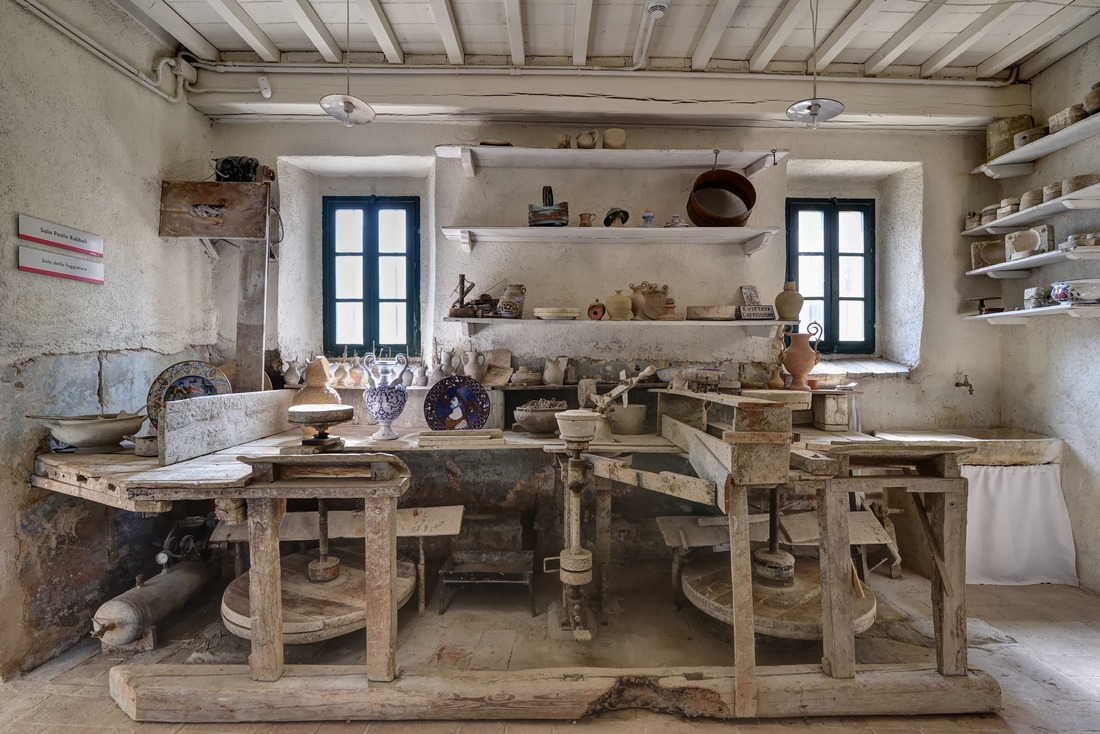
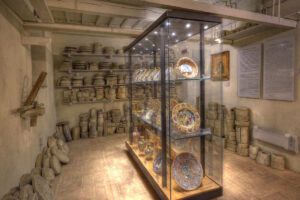
Her extraordinary production is still preserved and can be visited at the Rubboli Workshop Museum, located right next to the evocative Rocca Flea in Gualdo Tadino. Here, within the ancient walls where the glint of gold and ruby enchant visitors, the soul of a woman who knew how to fuse art with pragmatism lives on—proving that the light of an idea, if nourished with dedication, can shine forever.
An Unbreakable Bond: The Museum and Recent Discoveries
 Today, Daria Rubboli’s talent continues to be celebrated as a living heritage. On May 9th, in the evocative setting of the Sala della Città at the Rocca Flea, the volume “Il segreto dell’iride – I 150 anni della Manifattura Rubboli” (The Secret of the Iris – 150 Years of the Rubboli Manufactory, Volumnia Editrice) was presented—a fundamental tribute to one of the most emblematic brands of Italian artistic ceramics.
The highlight of the recent celebrations took place within the Rubboli Workshop Museum itself, where an exceptional document was unveiled: Daria Rubboli’s original diploma from 1899. The discovery of this previously unpublished piece enriches the factory’s historical documentation and restores further value to the figure of this extraordinary woman.
Info:
Museo Opificio Rubboli
Via Giuseppe Discepoli, 16, 06023 Gualdo Tadino PG
Comune di Gualdo Tadino
Piazza Martiri della Libertà, 4, 06023 Gualdo Tadino PG
Tel. 075 915021