By Our Editorial Staff
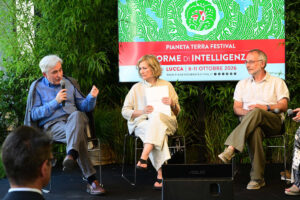
From 8 to 11 October 2026, Lucca will host the fifth edition of the Planet Earth Festival, an event directed by Stefano Mancuso, conceived and organized by Editori Laterza and promoted by the Cassa di Risparmio di Lucca Foundation.
The theme chosen for this year is “Forms of intelligence”, a topic that crosses science, technology, philosophy, environment and society, with the aim of questioning the very meaning of intelligence and its role in the future of the planet.
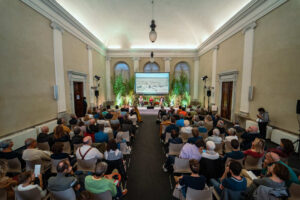
For four days, in the symbolic places of the city – from the Church of San Francesco to the Doge’s Palace, from the Botanical Garden to the Auditorium del Suffragio up to the Agorà Library – over ninety events will alternate including conferences, lectio magistralis, dialogues, interviews and shows. The protagonists will be scholars, researchers, philosophers, economists, writers and artists called upon to discuss the many expressions of intelligence, from forms present in nature to the most advanced artificial intelligence systems. Among the guests already announced are the theologian and expert in AI ethics Paolo Benanti, the bioengineer Antonio Bicchi, the microbiologist Paola Bonfante, the neuroscientist Sergio Della Sala, the neuroscientist Daniela Perani, the philosopher of science Telmo Pievani, the ethologist Giorgio Vallortigara and the neuroscientist Raffaella Rumiati.
The festival starts with a seemingly simple question: what do we mean by intelligence today? If for a long time it has been associated above all with the logical-mathematical abilities of the individual, the most recent scientific acquisitions show a much more complex picture. In fact, intelligence manifests itself in different forms: biological and artificial, individual and collective, cognitive, emotional, creative and strategic.
Research on the plant world, which has been at the center of Stefano Mancuso’s work for years, has shown how plants are able to communicate, adapt to the environment, optimize resources and develop sophisticated survival strategies. The animal kingdom also offers amazing examples of cognitive abilities, cooperation, planning, and tool use. Ecology also suggests that intelligence may be a property of the systems and networks of relationships that sustain life, rather than an exclusively individual characteristic.
At the same time, neuroscience continues to investigate the mechanisms of learning, memory and consciousness, while computer science and engineering are redefining the very concept of intelligence through the development of systems capable of learning from data, recognizing complex patterns, generating text and images and supporting increasingly sophisticated decision-making processes.
According to Stefano Mancuso, however, it is essential to distinguish between natural and artificial intelligence. The former arise from evolutionary biological processes, are rooted in experience, consciousness and emotions; the latter are human-designed computational systems, extremely effective in carrying out specific tasks but lacking real understanding, self-awareness and autonomous intentionality. Reducing the complexity of reality to simple forecasting models, observes the scientific director of the festival, means risking betraying its nature.
For Giuseppe Laterza too, questioning intelligence means reflecting on the meaning of being human and on our ability to promote coexistence, establish limits to the use of force and build sustainable development models. In this context, artificial intelligence represents one of the great challenges of the present: a technology full of opportunities, but which requires attention, awareness and constant reflection on the risks it can entail.
The theme chosen for 2026 opens up important ethical and political questions. Smart technologies are transforming work, education, cultural production and social relations. Who designs these systems? What values do they incorporate? Who benefits from innovations and who risks being excluded? These are questions that the festival will address through the contribution of scholars from different disciplines, fostering an open dialogue between science, culture and society.
As pointed out by the president of the Fondazione Cassa di Risparmio di Lucca, Massimo Marsili, the Planet Earth Festival confirms its vocation to investigate the great contemporary transformations: from climate crises to geopolitical tensions, from the infodemic to the artificial intelligence revolution. After having addressed issues such as the sustainability of the transition, the web of life and the instability of systems in previous editions, the festival now proposes a reflection on the capacities to learn, cooperate, adapt and innovate that characterize human beings, other living organisms and technological systems.
Exploring the different forms of intelligence ultimately means rethinking the boundaries between nature and technology, recognizing the interdependencies that bind us to the world, and building a culture capable of integrating knowledge, responsibility, and imagination. A path that, once again, will make Lucca a privileged place for discussion on the great challenges of our time.
Info: For more information please visit www.pianetaterrafestival.it / Facebook, Instagram, TikTok, LinkedIn, X and Youtube related profiles.