By Leonardo Massaccesi
History, Myths and Legends of the Truffle.
For millennia, the truffle has been shrouded in an aura of mystery, helping to spark the imagination of ancient peoples regarding its origins and fuelling their animosity in countless disputes with no clear winner.
 From the divine intervention of Zeus to the food of the devil and witches. A powerful aphrodisiac and an ever-present status symbol on the tables of the nobility across half of Europe. Physicians, shrewd merchants and entrepreneurial genius. All actors, protagonists in various capacities, in the same film: ‘the black diamond’. I’m not here to tell you how good it is. You already know that. I hope so. Then again, it’s a matter of taste.
I’ll start with a simple, almost rude question: do you really know where the truffle comes from? Not the mushroom, mind you. Even dogs know that. I’m talking about the idea. The prestige. The legend. This small, irregular object that today generates money, pride, festivals and disputes, and which in the past generated something quite different.
Try to imagine an ancient farmer standing before a clod of earth. He digs into it, extracts an irregular lump and discovers that it smells like nothing else. He sees no roots, finds no tree bearing that fruit, and has no idea where it comes from. The most reasonable explanation, for his time, is also the most spectacular: some deity must be involved.
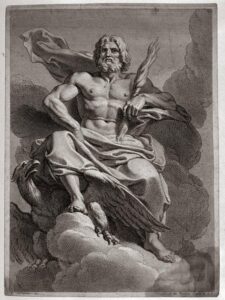
Greek tradition invokes thunder, rain and lightning. Theophrastus, in no uncertain terms, links truffles to thunderstorms. The Romans, being more pragmatic, whilst trying to solve the mystery (the idea that Jupiter’s lightning struck an oak tree is both convincing and unconvincing), simply eat them and chat. Juvenal loved them so much that he wrote: ‘Better that there be no wheat than no truffles!’ (This is not a piece of agricultural policy advice).
A celestial origin for something stubbornly subterranean: the contrast is too striking; the myth was bound to take root.
The paradox
 From the banquet of the gods to the devil’s larder. In the medieval mindset, the underworld evoked impurity, unknown forces and unsettling presences. The truffle thus found itself in the unsavoury company of witches, sorcerers and demons. In certain folk tales, it was imagined to be found near snakes’ lairs and unhealthy places. Fortunately, fear never quite got the better of gluttony. Thus, the very same food could be suspected of being diabolical yet served with pleasure. The shift from contempt to admiration also tells us something about ancient hierarchies: what arose from on high seemed more noble; what lay beneath one’s feet might appear humble. The truffle has managed to overturn even this social geography.
At the court of King Tartù
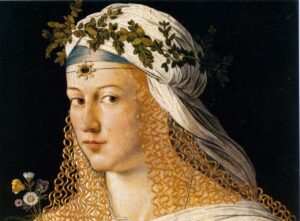
Between the Renaissance and the modern era, the truffle evolved from a natural curiosity into a topic of conversation, a diplomatic gift and an ally in matters of the heart. In Spoleto, people still recall the reception held for Lucrezia Borgia at the Rocca Albornoziana: fourteen courses, all – or almost all – featuring truffles. This detail belongs to anecdotal tradition and should be taken as such. But it is easy to see why it has endured. In that society, offering a rare delicacy meant displaying power, alliances and refinement.
Of course, the figure of Lucrezia, who over the centuries has become the protagonist of a thousand tales, is the perfect vehicle for the aphrodisiac legend surrounding the truffle. Yet her real-life biography is more complex than the mask of a seductress that popular culture has imposed upon her. In the courts of Europe, a scent could serve diplomacy just as well as a well-written letter. The truffle was among the gifts capable of opening a door, winning over a guest, or making an encounter memorable. From central Italy, it made its way to other cities, travelling alongside fabrics, books, news and ambitions. Caterina de’ Medici knows a thing or two about this.
Tradition holds her up as the heroine of a culinary revolution, which brought together the flavours, customs and refinements of our own country and the French court. Whether true or not, it is certain that the truffle found an ideal audience at aristocratic tables. This success was fuelled by another belief: that it aroused desire. And this was claimed by leading physicians and humanists, whose assertions were far removed from any scientific evidence. Castore Durante – a doctor from Umbria – went so far as to distinguish between male and female truffles; he even suggested their use in perfumery and in preparations featuring surprising spices.
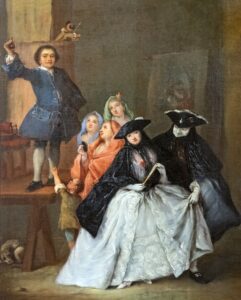
 Medicine, recipe and superstition: it was hard to tell them apart. Great confusion, big business. That is what many ‘Cerretani’ must have thought as they began to travel to fairs as travelling salesmen: love potions, miraculous concoctions, speeches delivered with impeccable confidence.
One of the etymological origins of the word ‘charlatan’ is traced back to these figures, associated with Cerreto di Spoleto.
An irresistible detail. After all, it wasn’t necessary for the potion to work; it was enough for the story to be convincing. And so a truffle could promise three things: prestige, pleasure and – according to the hawkers – miracles.
Disputes, privileges and notable figures
Verba volant, scripta manent. And indeed, many documents, statutes and accounts have been found that recount stories of the legal rights surrounding truffles.
It is not merely a matter of myth and desire, then. The issue is a fascinating legal exercise. To whom does that which no one sees belong? A truffle hunter finds a truffle on land that does not belong to him. To whom does it belong?
A modern dilemma that has plagued the communities of the Apennines for centuries. There were places where the right to harvest belonged to the inhabitants, others where land ownership was the deciding factor, and still others where the community regulated access through bans and penalties. The mere arrival of an ‘outsider’ was enough to turn a walk in the woods into a political issue.
In Orsano, Cerreto di Spoleto, Vallo di Nera and Scheggino: restrictions, leases on truffle grounds, and provisions in the statutes that have a theatrical ring to them.
The most surprising episodes concern the collective use of truffle grounds. In Sellano and other communities, the right to harvest truffles could be transferred or leased to fund services beneficial to the village. These included tax exemptions, religious services and even payments to doctors, midwives and vets.
In the fifteenth century, Spoleto’s financial records already made mention of the truffle trade and duties. This is clear evidence that an economy was developing.
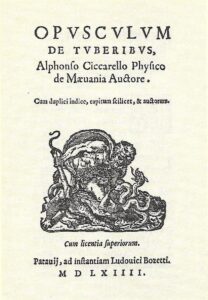 And when something starts to be worth money, the story gets complicated: rules are introduced, disputes arise… and colourful characters emerge. Among the most memorable is Alfonso Ceccarelli, personal physician to Pope Julius III’s sister. He was born a little further up the Valnerina – in Bevagna – and has gone down in history for two reasons. In 1564, he wrote what is now considered the first treatise on truffles: ‘Opusculum de tuberibus’.
The tone is that of someone seeking to do science, but his work is really more of an attempt rife with bibliographical acrobatics and parochialism: Bevagna, in his view, is clearly one of the finest truffle-growing regions. Furthermore, he is remembered for having been one of the finest forgers of his time.
A high-profile figure: he forged documents belonging to the Emperor and the Pope. For those who requested them, he fabricated family trees, noble relatives and even horoscopes. A busy career, brought to an abrupt end in Rome by decapitation.
Fast forward to the nineteenth century, and a man from Spoleto in Paris. Ormisda Francia.
Yes, that family of jewellers.
He discovered that the much-prised French truffles were not all that different from those back home. That’s where his business acumen came in. He had them sent to him and sold them under a French name to command a higher price. First Paris, then London, and eventually the palaces of Russia. His correspondence captures the business climate of the time: sudden opportunities, gruelling journeys, and jealously guarded secrets.
And, as in a spy story worthy of the name, here is the French antagonist: Martin Ravel de Montagnac, a cloth merchant with the air of 007.
He chanced upon a basket of truffles that had just arrived from Civitavecchia. Determined to trace the supply chain, he immediately set sail from Marseille for the port of Rome; from Rome he ended up in Umbria and then in Spoleto. It sounds like a made-up plot, yet it is part of the history of trade.
Meanwhile, other key figures were making their moves.
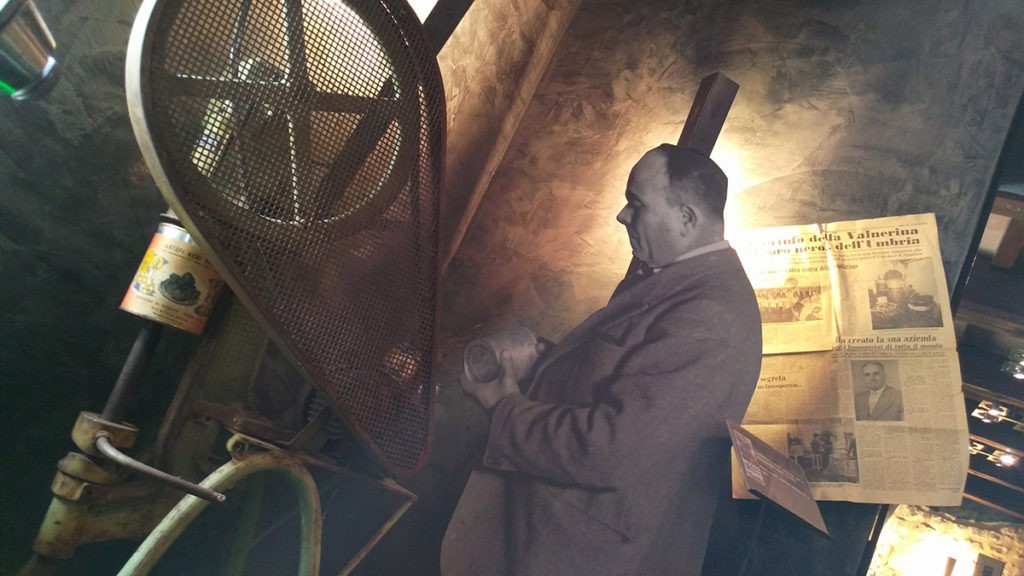
In Spoleto, the Mazzoneschi brothers went from being blacksmiths to industrialists. Costantino Urbani, with one of those insights that only seem trivial once you’ve seen them work, invented the airtight seal and revolutionised the way truffles were preserved. From that move sprang an entrepreneurial dynasty that is now known throughout the world.
The rest is almost our own history. A legend, a remedy, a market, a business. We merely found the truffle underground. Everything else – the prestige, the rules, the brands, the rivalries, the pride, the money – sprang from our own minds.
And they weren’t always bad ideas.