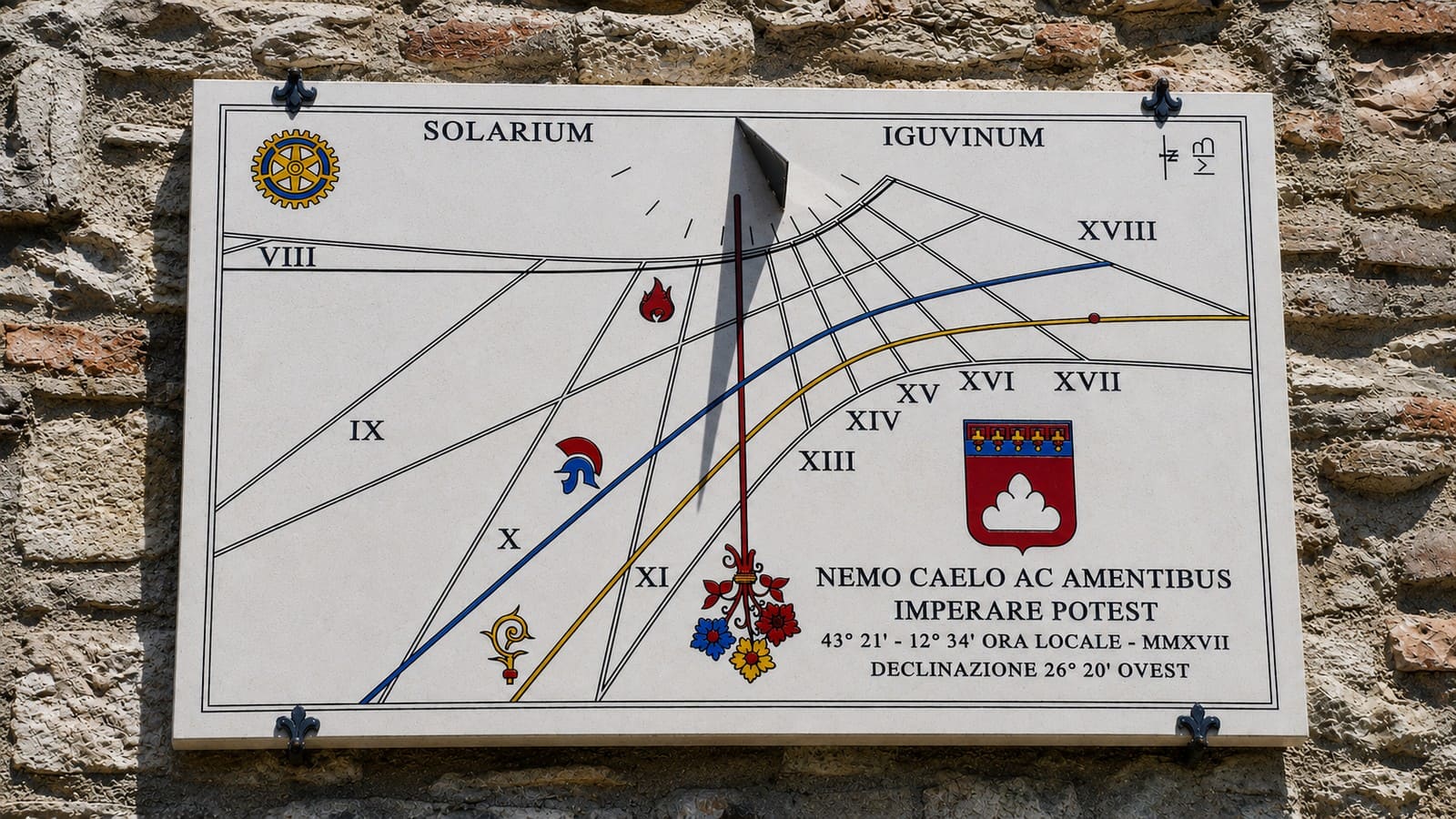
By Francesco Rosi
When we ask today, “What time is it?”, there is no longer any uncertainty in the answer. We live in a perfectly synchronized world thanks to smartphones and the global network that connects them. But who provides us with the time? Who controls our time?
 Most people don’t know the answer, and we take it for granted that our devices will continue to function with the same reliability.
Coordinated Universal Time (UTC) is determined using a network of highly precise atomic clocks distributed around the world, whilw specific organisations collaborate to ensure the consistency of time signals on a global scale. The fundamental unit of time, the second, no longer depends on the Earth’s motion but on the oscillations of the cesium atom, while the UTC scale is periodically adjusted to remain aligned with the Earth’s rotation.
Such precision is not merely a scientific exercise: today, it constitutes an indispensable infrastructure for the functioning of contemporary society.
“Time is money,” wrote Benjamin Franklin, and, even more so, “time is power”: whoever controls it governs civil society. Algorithms comb through financial markets, executing high-frequency trading (HFT) and profiting from transactions of varying durations that can be as short as milliseconds.
The time zone system based on the Greenwich Meridian, which is so familiar to us, now belongs to the 19th century and is the result of a long, arduous journey that was not without surprises and anecdotes.
It can be said, at least symbolically, that the world truly became synchronized on March 9, 1911, when the Eiffel Tower radio station also adopted the Greenwich time signal. The electrical impulse that traveled through the first undersea cable between Europe and America—laid only in 1866 after enormous efforts and many setbacks—was the time signal that made it possible to precisely determine the relative longitude of the two continents.
Trains were now transporting goods and people, and telegraphs were clicking away, transmitting information at the speed of light across the globe.
Ensuring synchronization is therefore an essential necessity of the contemporary world, but this has not always been the case.
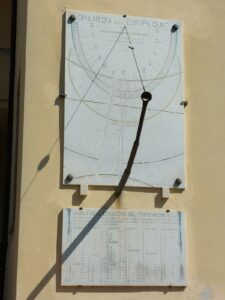
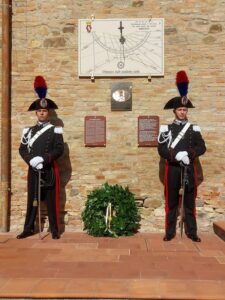 Before all of this, there was the sundial. It is the oldest instrument for measuring time, a representation of the Sun’s apparent motion across the celestial sphere, created by the shadow cast by the gnomon onto the dial.
Time was a local matter shared by small communities, and the ways of measuring it and dividing the day changed to adapt to the needs of different historical periods.
The certain phenomena that every person experienced daily were sunrise, sunset, and—though less obvious—noon, when the Sun reached its highest point in the sky.
When people began to structure the day by dividing it into hours, not everyone welcomed this innovation, as Plautus’s words from the 2nd century B.C. ironically attest:
“May the gods unmask the first person who invented the division of hours, the first who placed
a sundial in this city.
To our misfortune, he has sliced the day into pieces.
During my childhood, there were no clocks other than my stomach.
It was the best clock for me, the most accurate.”
In 525 A.D., St. Benedict formalized the practice—already widespread among the early monks and hermits—of morning and evening prayer, as well as the prayers of Terce, Sext, and None. The day, from dawn to sunset, was divided into twelve hours, as was the night; the length of the hours was therefore not constant throughout the year but, at our latitudes, varied from 45 minutes in winter to 75 minutes in summer.
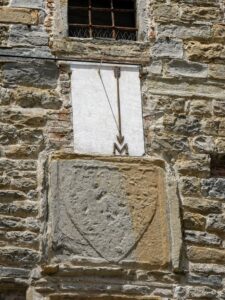 “It was about the sixth hour, and darkness fell over the whole land until the ninth hour; the sun was darkened. The curtain of the temple was torn in two. Jesus, crying out with a loud voice, said, ‘Father, into your hands I commit my spirit.’” (Luke 23:44–46)
In medieval times, the astronomical orientation of places of worship was carefully determined. The sun’s rays that penetrated these spaces created refined effects that highlighted the key moments of the day and the year. This practice faded in Renaissance-era buildings when the introduction of the compass and modern philosophical and scientific theories weakened the deep symbolic bond that linked medieval people to the observation of the sky.
These were also the years when the first mechanical clocks began to be built and the so-called “Italic hour” system came into common use, in which the nittemero (a period comprising one consecutive day and one consecutive night) was divided into 24 hours of equal duration. The date changed at sunset, as was customary in the East. Reading sundials set to the “Italian hour” system indicated how many hours remained until sunset—essential information for walled communities that used to close their city gates at sunset. This system, with the slight variation of the “bell tower Italian hours” system (the twenty-fourth hour strikes half an hour after sunset, at the Hail Mary), is depicted in one of the diagrams on the sundial on the facade of Spoleto City Hall.
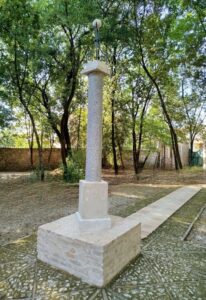
The “clock adjuster,” responsible for regulating public mechanical clocks, would observe noon as indicated by the sundial and realign the mechanical clock. Of these sundials, showing the sole noon line, only a few examples remain in our region; one such example is the one located in the park of Villa Redenta, in Spoleto, which I had the opportunity to study during the recent restoration of the structure.
French time, which we still use today, was introduced in Italy at various times and not without difficulty, beginning in the Napoleonic era. Mechanical clocks, which were becoming increasingly accurate and affordable, completely supplanted sundials, relegating them to the role of curious scientific or decorative instruments.
 My introduction to gnomonics (the science and art of designing, calculating, and constructing sundials) dates back to my childhood. Every morning, on my way to elementary school, I would pass by the imposing sundial on the wall of the “Scuola Agraria” in Città di Castello. Even as a child, I was fascinated by its obvious complexity, but whenever I asked how it worked, the answers were always vague and evasive.
Many years later, after becoming an architect and delving deeply into disciplines such as mathematics and descriptive geometry, that sundial would become my first restoration project. In the introduction to the book *Le Antiche ore* by Mauro Bifani and Manlio Suvieri, I wrote that sundials take us back to the fundamental source of our concept of time: the alternation of night and day; they subject us once again to the ancestral laws of the heavens and their apparent motion. Designing and building them requires mastery of the calculation techniques and manual skills necessary to make the object as precise as possible. The result, however, never has the austere appearance of a simple measuring instrument: it is a combination of art and science.
The study of gnomonics has great educational value, drawing on disciplines such as mathematics, computer science, descriptive geometry, astronomy, geography, and history; a good measure of manual dexterity and ingenuity is required to build sundials.
Today, our sense of time relies on satellites, computer networks, and atomic clocks. Sundials, however, remind us that the Sun is at the origin of all measurements of time. The slow passage of the shadow across the dial continues to tell the story of the ancestral relationship between humankind and the sky.