By Rosina Fracassini
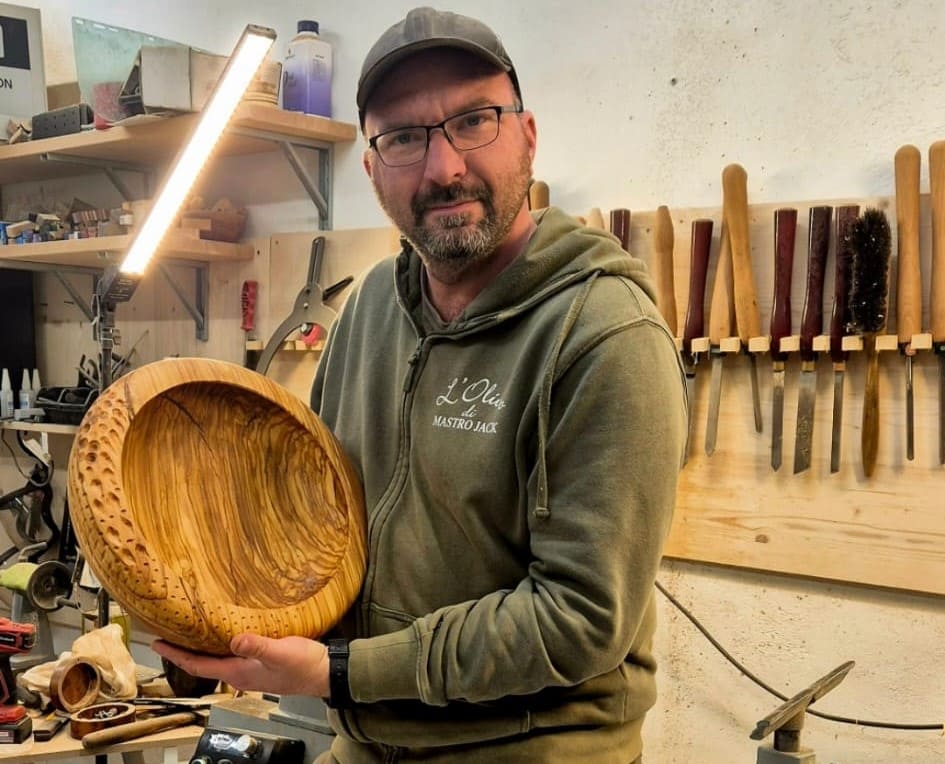
In Greve in Chianti, Jacopo Fintoni – known as Mastro Jack – runs an artistic woodworking practice dedicated to the creation of handcrafted pieces, deeply rooted in the local territory. It is here that his work takes shape: that of an artisan who has chosen to transform a personal turning point into a project of cultural and human value.
“There comes a moment in life when what you have set aside comes knocking again. For me, it happened in 2018.”
With these words begins the story of a non-linear journey, marked by pauses, detours, and meaningful returns.
After graduating from the Art Institute of Florence in 1997 as a Master Goldsmith, Fintoni built an intimate relationship with materials from an early age. Over time, his training expanded through diverse experiences: from ceramics, studied between Florence and Impruneta under the guidance of masters of great tradition such as Maestro Ricceri, to graphic design, and even music. A multifaceted path, driven by a constant need for expression.
Yet, as often happens, life led him elsewhere. Between work and personal circumstances, art was set aside — never lost, but suspended.
“I didn’t lose it, I just left it there for many years.”
The turning point came in 2018, following the loss of his job: a difficult moment that became an opportunity for renewal. Fintoni reopened that “drawer” and chose to start again from scratch, this time with wood. A living, warm material, deeply connected to the Tuscan landscape and capable of telling stories through its grain.
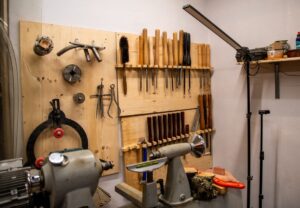
The beginning was marked by observation and humility: he learned by watching other artisans, “stealing with his eyes,” as he puts it. He trained in woodturning, experimented, and refined his technique. Until 2020, when he opened his workshop: an authentic space where each object is entirely shaped by his hands.
Olive wood became his material of choice — not by chance, but as a conscious, identity-driven decision. Mastro Jack favors local materials, often destined to be discarded or burned, giving them new dignity and beauty. Each creation is unique, because the material itself is unique.
“Very often, it is the wood itself that tells me what it wants to become.”
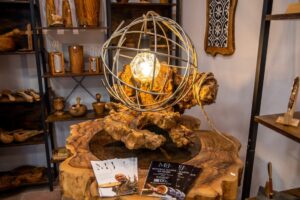
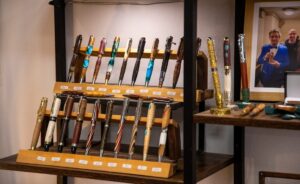
Lamps, sculptures, clocks, pens: objects that combine aesthetics and functionality, designed and crafted with meticulous care. Quality is a fundamental principle: even the materials used are certified, including those intended for food use. A balance between art and utility that reflects a contemporary vision of craftsmanship.
Over the years, Mastro Jack’s work has received significant recognition: a letter of appreciation from the President of the Italian Republic, Sergio Mattarella, features in industry publications, and collaborations with architects and distinguished clients, both in Italy and abroad. Yet, the heart of his work remains the workshop.
Today, in his new space in Greve in Chianti, Mastro Jack pursues a clear vision: to preserve and renew a form of Italian artistic craftsmanship that risks disappearing.
“Choosing a handcrafted object means choosing something that lasts over time.”
It is not simply a purchase, but a way of supporting a system of values: the territory, manual skill, respect for materials, and the time required to transform them. A gesture that goes beyond consumption, becoming a conscious and ethical choice.
Although he works independently, overseeing every stage of the creative process, Fintoni strongly believes in sharing knowledge. For this reason, he organizes artistic woodturning courses and workshops in his studio — hands-on training experiences where he transmits skills and expertise. He is also accredited by the Tuscany Region to host training internships, with officially recognized certificates: a concrete commitment to preserving a valuable tradition.
The connection with wood and materials, however, does not fully encompass his creative expression. Alongside his craftsmanship, Jacopo also cultivates writing, a passion rooted in his family history: his father was a writer and poet. Today, he carries on this legacy mainly through poetry, with two published works and an ongoing personal exploration.
For him, writing and working with wood are deeply related gestures: both require listening, time, and an authentic relationship with what is in front of him — whether material or word. Two different yet complementary languages, through which he gives shape to an inner world that finds tangible expression through making.
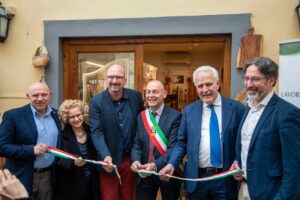
Over time, Mastro Jack’s clientele has expanded far beyond local boundaries, reaching different parts of the world. An important achievement, but also a daily challenge.
“I don’t speak much English, and sometimes that makes direct communication more difficult.”
And yet, he adds, there are universal languages capable of overcoming any barrier: gesture, material, passion.
Those who wish to discover this world up close can visit Mastro Jack’s workshop at Via Roma 20 in Greve in Chianti, or follow his work on social media. An invitation not only to observe, but to understand the value of what is created slowly, far from the logic of industrial production.
Because, ultimately, Mastro Jack’s work is much more than craftsmanship: it is a story of return, of listening, and of courage — a continuous dialogue between who we were and who we choose, every day, to become.
Info: Mastro Jack, Via Roma 20, Greve in Chianti (Fi) / Tel. +39 3394505485 / www.mastrojack.com