By Riccarda Riccò
From the Castle’s cultural heart to lively squares filled with young people, Mayor Magnani sketches out the profile of a new kind of tourism for the jewel of the Apennines: “We succeed by working together.”
 There comes a moment when the mountains stop being just a seasonal postcard and become a vision for the future. In Sestola, that moment is now. The old “passeggiata” tourism – slowly strolling up and down the main street – is giving way to a dynamic, curious and outward-looking approach to hospitality.
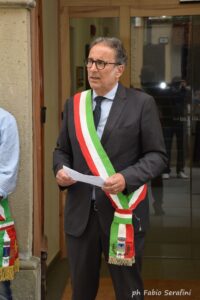
Leading the way through this transformation is Mayor Fabio Magnani, who is committed to making tourism a year-round activity: “Tourism has changed; it moves faster. People want to explore, discover and enjoy a steady stream of experiences. That’s why we’re working across all four seasons: spring, summer, winter and an autumn that is revealing extraordinary potential.”
The town’s event-planning team is already in full swing for the Christmas holidays and New Year’s Eve, with a three-day program developed in close collaboration with local businesses and accommodation providers. The goal is to create a place where different generations can come together.
“We’re focusing especially on families and the bond between grandparents, parents and children,” Magnani explains, “which is why we’ve invested in playground safety and in showcasing our Castle, which becomes an open-air stage for opera, theater and poetry.”
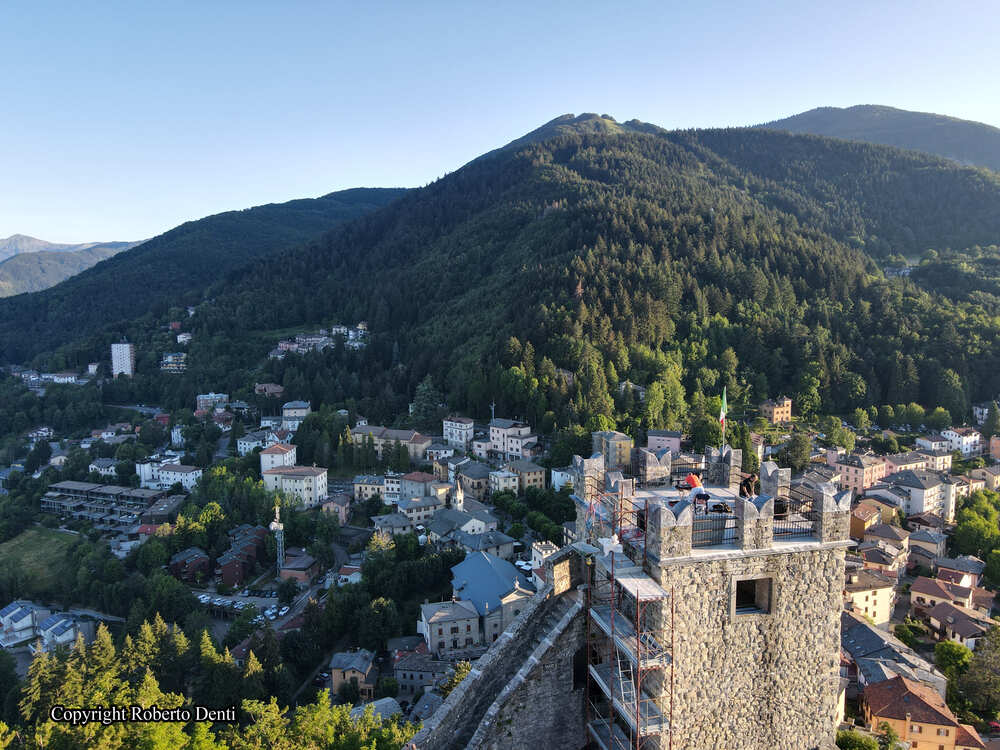
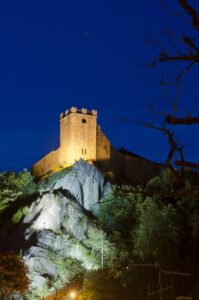
Cultural events are often set against the backdrop of the park surrounding the Rocca, a powerful symbol of Sestola’s identity, renowned for its thousand-year history and hilltop setting. This magnificent place is home to an outstanding cultural center within its ancient walls: the Museum of Mechanical Musical Instruments, with a collection of more than 120 pieces dating from the eighteenth century to the present; the Museum of Mountain Life and Traditions, dedicated to life and customs in the old Apennines; and the Room of Memories, devoted to opera singer Teresina Burchi. And that’s not to mention the Rocca’s beautiful, intimate oratory and its fifteenth-century frescoes, the Stories of Saint John the Baptist.
 The hamlets of Casine, Castellaro, Rocchetta Sandri, Roncoscaglia and Vesale, as well as the areas of Passo del Lupo, Pian del Falco and Poggioraso, encircle the town and add to the beauty and uniqueness of the area. Special attention is paid to their care and upkeep, both by the local administration and by the volunteer associations active in the area.
Back in Sestola, its new identity is taking shape in streets buzzing with young people and at events held in Piazza Passerini: “We want young people to have their own music, from rock concerts to club nights, right here. That lets them have fun safely, without having to drive, and gives families great peace of mind.”
Numerous events also bring life to the town’s other central gathering place, Piazza della Vittoria. The setting includes the white War Memorial, with its fluted Doric columns on square pedestals, and the iconic 1961 fountain. In this work, Modena sculptor Vittorio Magelli paid tribute to the Leo and Scoltenna streams through two celebrated bronze figures.
And so the famous “passeggiata” of the past takes on a new energy, with an aperitif and a stop at one of the many market stalls that often set up here. Be sure, too, to stop for a refreshing drink at the nineteenth-century Fontana del Forno, famous throughout the area, or at the more secluded and romantic Fontana degli Amori, near the beginning of Corso Umberto I – a traditional meeting place for young people embarking on their first romances.
There is no shortage of services, hospitality comes naturally, and the beauty has always been here, as recognized by the Touring Club Italiano’s Orange Flag award. What’s more, tourism figures for the Province of Modena and Emilia-Romagna show strong growth in the American and British markets (up 10% in recent years). Many international visitors who come to the provincial capital for the Motor Valley or its food scene then head to the Apennines to hike and mountain bike along more than 400 mapped trails in the area.
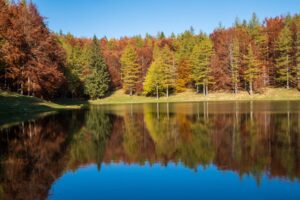
Among the “trekking classics” is the historic route starting on Via delle Ville, which connects the town centre to Pian del Falco, crossing the beautiful Roncacci Park along old mule tracks and ski runs. Another classic is the climb to Monte Cimone, starting from enchanting Lago della Ninfa or from Pian Cavallaro.
 To welcome this global audience, old local boundaries need to come down.
“Local rivalries can add a little ‘salt and pepper’ to an area, but today our collaboration with neighbouring municipalities is total,” says the mayor. “If a tourist comes from England, traveling 7 or 10 kilometres between one town and another is nothing to them. Working together through integrated tourist offices is the only way to be truly attractive.”
Magnani’s vision extends beyond welcoming tourists: he hopes to reverse the demographic trend. Many families are choosing to leave the city.
“The mountains offer an exceptionally high quality of life and spaces on a human scale,” the mayor concludes. “In city traffic, people often spend as much time traveling a few kilometres as it takes to cover the distance between us and the urban centres. To make this return permanent, our priorities are clear: expand the digital network to support remote work and improve road connections in partnership with the Union of Municipalities. The future of the Apennines is a book waiting to be written.”
Info: IAT-R Sestola Tourist Office Tel. 053662324 – 3666688781
e-mail: turismo@comune.sestola.mo.it
MAJOR EVENTS IN SESTOLA
Sextula Medievale: historical reenactment in late June
Naturalmente Sestola: a weekend dedicated to holistic wellness and outdoor activities, in late June
The Hamlet Festivals: throughout the summer, Sestola’s hamlets take turns hosting patron-saint festivals
Summer Events and Concerts: in July and August
Pilgrimage of Our Lady of the Snows: pilgrims climb to the summit of Cimone from all sides of the mountain, on August 5
Cime di Birra: a festival dedicated to craft beer, street food and live music, in late August
La Fôla dla Chersènta: a festival celebrating the queen of the Apennines, the crescentina, in late September
Chocolate & Croccante Festival: a major autumn celebration of confectionery and fine artisanal products, in October
Welcome Winter: a festival marking the start of the winter and Christmas season with the lighting of the festive lights, over the Feast of the Immaculate Conception long weekend, December 6–8
Christmas Markets: in the historic center, in December
Cimone Music Festival: music and fun at the Sports Center, in late December
Epiphany Festival: the Befana arrives in the square, handing out sweets and stockings to children amid games and traditional mountain songs