By Daniele Cagnoni and Chiara Sebastiani
 A journey through the homes of Lucca.
There is an unusual way to observe Lucca: to look at it through the windows of its houses. Those of the rustic houses overlooking the olive groves, the apartments in the heart of the city, the historic villas and the new buildings surrounded by greenery. Daniele Cagnoni tells us about it, who a year after our previous meeting takes us on a journey made of light, landscape, comfort and architecture. Here are his reflections, gained in over twenty-five years of experience among the homes of our territory.
There are details that tell the story of a territory better than many words. Windows are one of them.
For many years I have been entering the houses of Lucca for work. Historic villas, rustic houses surrounded by greenery, apartments in the towns, new buildings with contemporary lines. Every home has its own identity and, almost always, this identity is reflected in the way the house opens up to the outside. Windows are not just for letting in light. They tell of an era, a way of life, a different relationship with the landscape and with domestic comfort.
The houses of the seventies
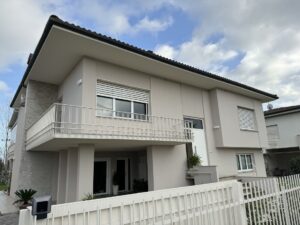
In the houses built between the sixties and seventies there are often very large openings for the time. Those were years of optimism and growth, in which natural light began to become the protagonist of domestic spaces. Many of these windows still look out onto manicured gardens, terraces and glimpses of the Lucca countryside. However, the technologies available at the time were very different from today’s. Simple glazing, poorly insulating profiles and limited sealing systems often make these homes more vulnerable to summer heat, winter cold and noise from outside. Yet, behind those windows there is still an important lesson: the desire to experience the house in connection with the surrounding environment.
The country houses of the Lucca hills
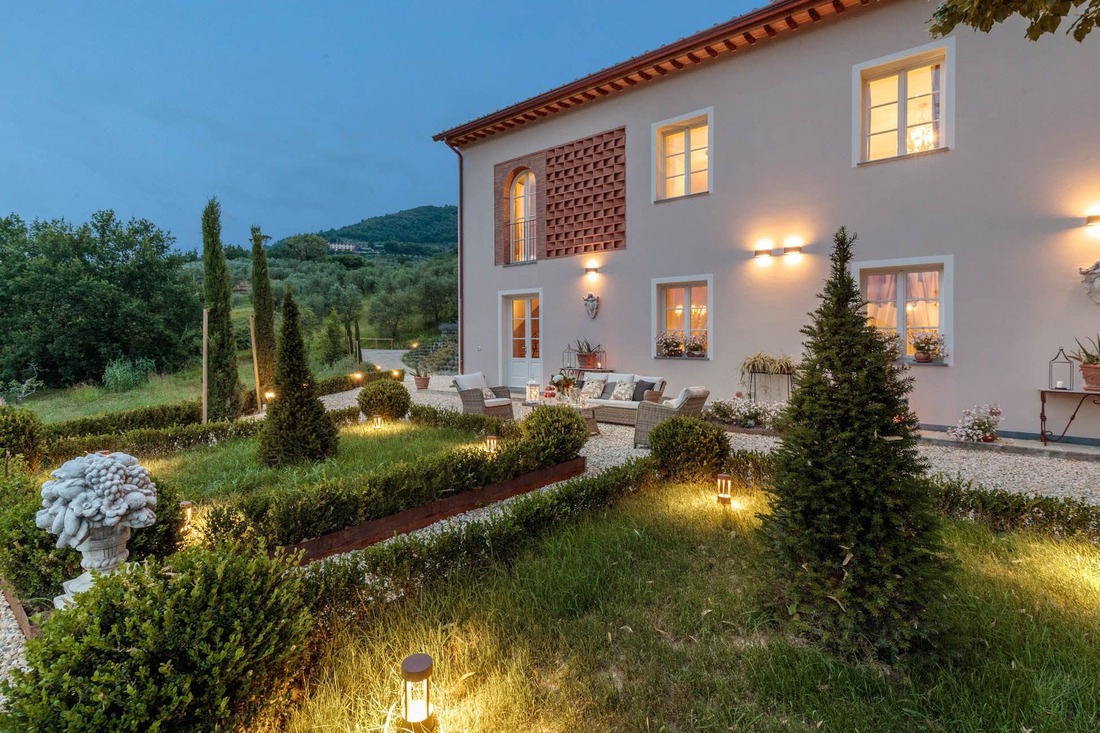
Going up to the hills, the language changes completely. In historic cottages, the openings are generally smaller. This is not an aesthetic choice, but an intelligent response to the needs of the time. The massive masonry and smaller windows helped to keep the rooms cool during the summer and more stable during the winter. Today these buildings represent one of the most fascinating expressions of Tuscan architecture. Through the windows enter the green of the olive trees, the profiles of the hills, the soft light of the sunset and that sense of tranquility that makes our territory unique. Here the window is not just a technical element. It is a frame on the landscape.
Apartments in the city
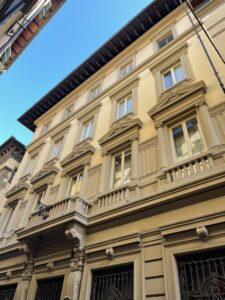
In apartments in built-up areas, another need emerges: comfort. Those who live in the city are looking for brightness, silence, safety and well-being. Windows therefore play a fundamental role in improving the quality of daily life. Good design makes it possible to reduce noise, increase interior comfort and enhance spaces without altering the architectural character of the building. In these contexts, technology often works invisibly, but produces concrete and immediately perceptible effects.
Contemporary villas
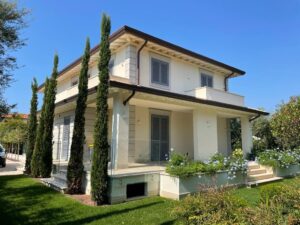
In modern homes, the window becomes the protagonist. Glass surfaces are expanding, profiles are becoming thinner and the boundary between inside and outside is almost disappearing. Natural light enters deep into the rooms and the landscape becomes an integral part of the architecture. The new villas in Lucca are increasingly seeking this continuous dialogue with the outside, transforming the window into an instrument of well-being and quality of living.
More light, more comfort, more well-being
In recent years I have observed an important change. People are no longer simply looking for windows that are beautiful to look at. They are looking for a house that fits well on those who live in it. Natural light, acoustic comfort, room temperature, ease of use and even psychological well-being have become central aspects in the design of living spaces.
A well-thought-out window doesn’t just enhance the aesthetics of a home. It improves the way you live it every day.
The right window does not exist.
After years spent entering the houses of Lucca, I learned a simple thing.
The perfect window does not exist. There is the right window for that house, in that context and for those people. The ideal solution for a rustic house in the hills could be wrong for a contemporary villa. What works in a historic downtown apartment may not be suitable for a high-performance new build. For this reason, the choice should never start from a catalog, a discount or a promotion. It should start with the analysis of the house. How is it displayed? What problems does it have to solve? What level of comfort do you want to achieve? How do windows interact with masonry, insulation and systems?
Windows are one of the most complex elements of the building envelope. Energy, acoustic, aesthetic, functional and maintenance aspects must coexist in a balance that requires specific skills. For this reason, the value lies not only in the product, but in the ability to identify the most suitable solution and integrate it correctly into the building.
When this rating is lacking, the risk is to buy an excellent window for the wrong place or compromise a good product with a superficial design.
Today, perhaps more than sellers, we need professionals capable of reading the characteristics of a house and transforming them into conscious choices.
Because a window is bought a few times in a lifetime. But the comfort it generates will accompany those who live in that house every day.
Who is Daniele Cagnoni?
Daniele Cagnoni is the founder of Diemme Infissi and has been working in the window and door sector since 1999. He is a Level 4 Installation Teacher, SerramenTechnician and a member of the UNI Commission which deals with the drafting of technical regulations in the sector. For years it has been supporting individuals, designers and companies in the choice and correct integration of windows and doors, with particular attention to living comfort, the durability of solutions and the prevention of building diseases.
If you are considering a renovation, a new construction or simply want to understand which solutions are most suitable for your home, you can learn more through the dedicated technical consultancy service.
Info: Diemme Infissi srl, Viale Europa 1, Capannori (LU) / Tel. 0583 990244 / www.diemmeinfissi.com / info@diemmeinfissi.com