By Chiara Pietrella
Wrist fractures, particularly those of the distal end of the radius, are one of the most frequent injuries of the upper limb. How to treat them? We ask Giulia Pompili and Celeste Magara, the physiotherapists we have already met in previous issues, who with passion and dedication deal specifically with trauma, injuries and pathologies of the hand and upper limb in their centres in Siena and Grosseto.
 The incidence of fractures in the upper limbs is high both in the elderly population, especially in women due to the greater presence of osteoporosis, and in young subjects following high-energy trauma or sports activities. “It is estimated that distal radius fractures make up about 15-20 percent of all those treated in emergency rooms,” the two professionals tell us. “The most common traumatic mechanism is the fall on the extended hand, which leads to immediate pain, edema, functional limitation and sometimes obvious deformity of the wrist. Treatment can be conservative or surgical, depending on the type of fracture, stability, age of the patient, functional requirements and possible joint involvement”.
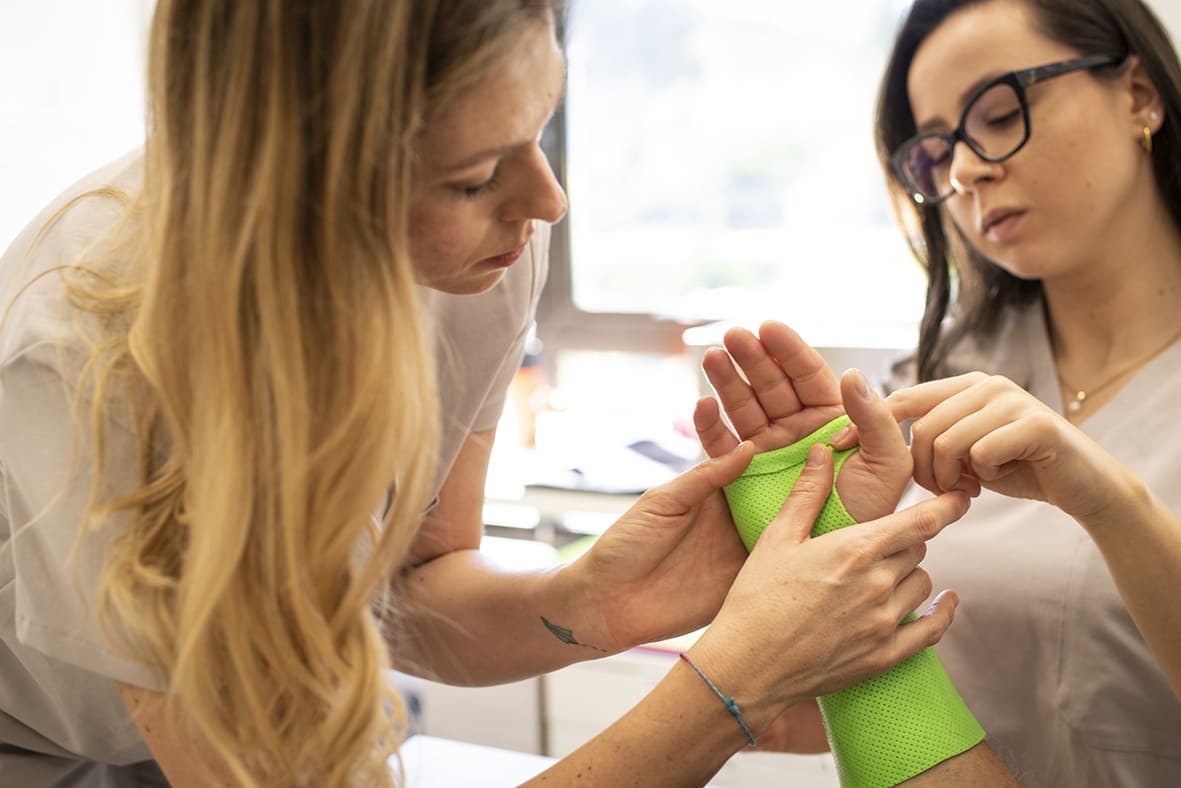
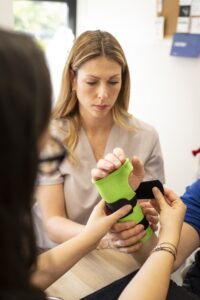
In both cases, they explain to us, physiotherapy plays a fundamental role in the recovery of the functionality of the hand and upper limb, with the aim of reducing pain and stiffness, recovering mobility, strength, dexterity and promoting the return to daily and work activities. “In conservative treatment, mainly indicated for compound or stable fractures, the wrist is immobilized by means of a brace that can replace the plaster cast on medical advice,” continue Giulia and Celeste. “During the immobilization phase, rehabilitation intervention focuses on controlling edema and pain, educating the patient, and maintaining mobility of the free joints, especially fingers, elbow, and shoulder. It is essential to encourage early active movements of the fingers to prevent stiffness, tendon adhesions and circulatory changes. Once the immobilization is removed, the joint recovery phase of the wrist and forearm begins.”
VL: “How does the treatment proceed then?”
G and C: “The first weeks are dedicated to the gradual recovery of the joint range through active, active assisted and subsequently passive mobilizations, respecting the patient’s symptoms and the biological times of bone consolidation. Particular attention is paid to the recovery of functional movements of the wrist, often limited after the period of immobility. Subsequently, progressive muscle strengthening exercises, proprioceptive training and specific functional activities are introduced”.
VL: “And in the case of surgical treatment?”

G and C: “Surgery often allows for earlier mobilization than conservative treatment, reducing the risk of joint stiffness. However, even in these cases, the rehabilitation process must comply with the surgical indications and the stability obtained. Post-operative physiotherapy can begin as early as the first days after surgery, initially with analgesic and anti-edema treatment, scar management and finger mobilization. In the presence of major painful symptoms or persistent edema, drainage techniques, elastic compression bandages and desensitization strategies can be used. Pulse mobilization is introduced progressively according to the surgeon’s instructions. Subsequently, the work on the recovery of strength and function intensifies, with gripping, manipulation exercises and activities oriented towards the functional gesture”.
VL: “How long does rehabilitation last on average?”
G and C: “Complete recovery varies in relation to the severity of the fracture, the age of the patient and the presence of any complications. The main complications that the hand physiotherapist must monitor include joint stiffness, algodystrophy, strength deficits, carpal instability, nerve compressions, and tendon adhesions. Early and personalized management is crucial to optimize recovery and limit functional outcomes. The rehabilitation approach to wrist fractures therefore requires specific skills in the evaluation of the hand and upper limb, close multidisciplinary collaboration with the orthopedic team and a therapeutic program adapted to the clinical and functional characteristics of each patient”.
Info: SIENA, Centro Medico Igea, Strada Massetana Romana, 12/6
GROSSETO, Studio Beside, Via Aurelia Antica, 46/scala C
Dott.ssa Celeste Magara: +39 345 5759866
Dott.ssa Giulia Pompili: +39 339 5651731