By Beatrice Botticelli
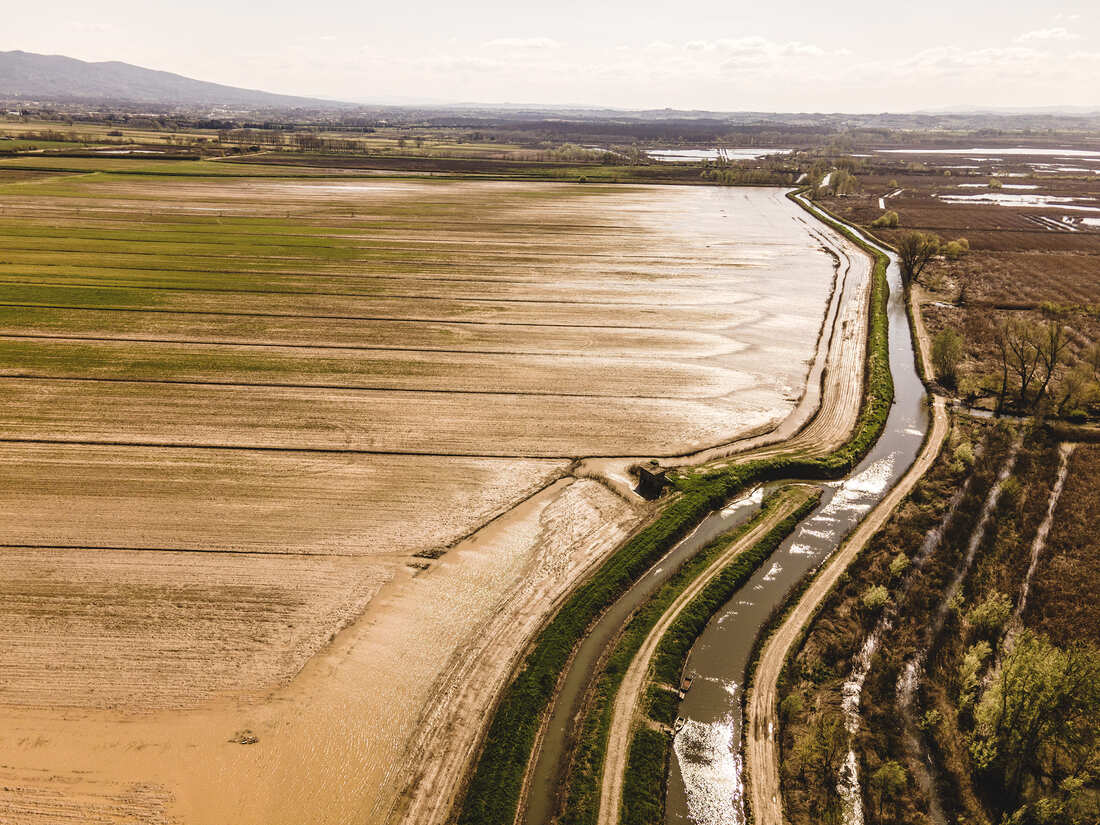
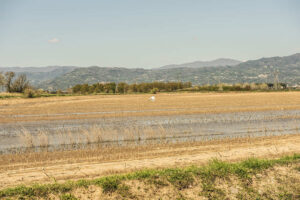
Nestled between the Cerbaie and Montalbano hills, the Padule di Fucecchio has always been the heart of the Valdinievole. A place of immense natural value where history, culture and memory intertwine, much like the Sarello, a marsh grass, was once woven to make baskets and matting. An art that they are now seeking to rediscover, just as they are seeking to rediscover all that – so much – the Padule has to tell. And initiatives to promote the area are multiplying.
Although 75% of the area lies within the municipality of Ponte Buggianese (Pt), the Padule is a ‘common good’ for all the neighbouring municipalities – across the provinces of Florence, Pistoia, Lucca and Pisa – which are promoting initiatives to enhance it and aim to network to maximise the effectiveness of every action. “The Padule di Fucecchio is a place of unique beauty and richness, expressed in countless ways,” says the mayor of Monsummano Terme, Simona De Caro. “It is a space that our municipality and the others are seeking to promote more and more, with the aim of attracting new tourists and reconnecting with local residents”.
Promoting the 2,000 hectares of marshland – which make it the largest inland wetland in peninsular Italy – requires strategy and collaboration. “In this regard, the ‘Naturalmente Valdinievole’ masterplan has been in place since 2023, with all eleven municipalities of the Valdinievole region collaborating on it,” explains De Caro. A project by the Caript Foundation to create a cycle and pedestrian route that, building on existing paths, connects the various landscapes. At its heart is also the promotion of the Padule di Fucecchio protected area, with its rich history, culture and environment”.
More recently, the agreement for “La trave del Montalbano” was signed, an initiative that, transcending administrative and territorial boundaries, brings together ten municipalities in the provinces of Pistoia, Prato and Florence, with Lamporecchio as the lead partner, in a project to enhance the area based on slow tourism and soft mobility. “In this context, the Padule, with its environmental significance, becomes a symbol of the sustainable tourism we are focusing on”, comments De Caro. Precisely because of its rich biodiversity, the Padule di Fucecchio has this year been included on the list of wetlands of international importance under the Ramsar Convention, an intergovernmental treaty for the conservation and sustainable use of wetland ecosystems.
“Inclusion in the Ramsar network is a highly valuable international recognition for all the riverside municipalities, between which there is excellent cooperation”, adds Monica Marraccini, deputy mayor and councillor for tourism in Monsummano Terme. “In addition to the initiatives carried out with the support of the Region of Tuscany, whom I thank for the attention they have given to the protection of the Padule, both in terms of maintenance and the defence of biodiversity, as well as tourism development and support for economic activities, the municipalities continually propose initiatives open to the entire population living in the Padule area. This synergy has its centre in this great environmental wealth”.
The Padule is, in fact, a precious and complex ecosystem, comprising marshes, ponds, riparian woods and stands of Phragmites australis – among the largest and most important in Italy – and providing a habitat for numerous animal species. A Special Area of Conservation (SAC) and Special Protection Area (SPA) since 2024, it is part of the LIPU network of nature reserves and plays a key role in the breeding, migration and wintering of birds. Over 11,000 waterbirds, representing 40 different species, have been recorded by the Tuscan Ornithological Centre “Paolo Savi” Ets (January 2026).
Rare species such as the whinchat and the sedge warbler find refuge here, and the bittern and the white stork are increasingly common; the white stork returned to nest in Tuscany in 2005 in an area adjacent to the Padule. Other species of interest include the little bittern and the purple heron, and for some years now the shelduck has been nesting in the reserve. The La Monaca – Righetti area, on the other hand, is home to a significant colony of cormorants and other heron species. Among the wintering waterbirds is the teal, the smallest European duck. Among the most common ducks are the shoveler, the pochard and the mallard. There are also many little bitterns (a European ibis) and flamingos.
Other typical features of the area include ponds, known as ‘chiari’, wet meadows, sedge marshes and poplar groves. Among the rich insect fauna, one small butterfly stands out: the marsh fritillary, found only in the northern plains and wetlands of northern Tuscany.
Among the characteristic mammals is the rice field mouse, the smallest on the European continent.
A green oasis where you can immerse yourself thanks to an extensive network of trails and activities such as birdwatching, hiking and bike tours. In April, the Municipality of Monsummano is organising two historical-naturalistic excursions run by the Ecoistituto delle Cerbaie, focusing on the Padule. The first, on Saturday 18 April (2.30–6 pm; 6.5 km), is ‘L’Anello di Monsummano Alto’, which follows the geological trail through the woods up to the medieval village, from where you can view the Padule di Fucecchio from above. On Sunday 26 (9.30 am–1 pm; 8 km), there is “L’Anello dell’isola”, through the countryside of Monsummano and the wetland: a route through vegetation and birdlife that also delves into history, with an account of the land reclamation and traditional water-related activities. Because the Padule is also the guardian of the region’s rural history. And that’s not all.
“The Padule allows us to retrace key moments in our history,” recalls Monica Marraccini, “for example through the ‘Anello della Memoria, which combines naturalistic interest with the memory of the events surrounding the Nazi massacre in Fucecchio. This theme was also explored last March in the special exhibition dedicated to the Padule at the Museum of the City and Territory in Monsummano Terme: a collaborative event that highlighted just how closely this area is intertwined with the history of the municipalities that now border it.”
Info: www.riservafucecchio.it/padule-di-fucecchio/