By Simone Bandini
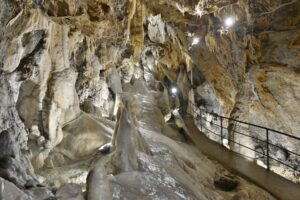
Located in the Park of the Apuan Alps, La Grotta del Vento is a site of extraordinary speleological and naturalistic value that was discovered in 1898, almost by chance, by a group of young people from Fornovolasco, intrigued by a strong current of air coming out of a small crack in the rock. Today it is an ‘obligatory’ stop of interest for those who visit Garfagnana and suddenly find themselves immersed in a ‘journey to the center of the earth’, in the style of a Jules Verne novel.
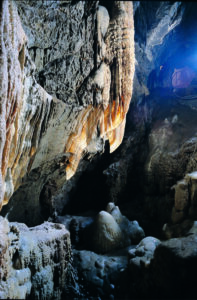 Thanks to the commitment of Vittorio Verole Bozzello, the cave was equipped and opened to the public on July 1, 1967. Experts now consider it one of the most beautiful and complete caves in Europe, capable of articulating for its visitors three different itineraries that enter a dreamlike underground world. It seems that initially, it was a little girl who was only four years of age, due to her small size, who pushed herself into the narrow opening, saying that the passage widened and led to darkness. So the boys of Fornovolasco, armed with pickaxes, widened the narrow passage to finally reach the first large room, now called “Sala dell’Orso”.
The name derives, therefore, from the strong blast of air (like a wind, in fact) which is due to the difference in temperature between the inside and the outside. The same draught that made it possible to identify the cavity.
We met with Vittorio and listened to his story.
The history of the Grotta del Vento was not born as a simple tourist project, but as a natural evolution of an authentic passion. As a child, Vittorio was fascinated by everything below street level: manholes, tunnels, basements of the walls of Lucca. Then, with the first bicycle, came the hills and the first caves. At the age of 14 he began speleological activity, and at 18 he founded the Speleological Group of Lucca, starting a path that combined exploration and scientific research.
In the years when speleology was still relatively unknown, a small cavity was enough to arouse wonder. The first public screenings and the ‘speleogite’ – guided excursions in unequipped caves – were born precisely from the desire to share these discoveries. But soon a new awareness emerged: curiosity, if not accompanied by knowledge, could become dangerous.
“Those who returned from a trip felt like a speleologist,” says Vittorio, “but without the necessary skills they risked getting hurt or, worse, damaging the cave.” Thus was born a fundamental intuition: to work on an accessible, safe, but above all educational place.
 Tourist caves already existed, in Italy and abroad. But what Vittorio saw during his visits left him dissatisfied: “They were recounted like amusement parks.” Geological formations transformed into imaginative figures, simplified explanations, little attention to scientific reality.
His goal then became clear: to find a ‘complete’ cave, capable of showing all the facets of the karst phenomenon, and to tell it for what it really was.
In 1961, during a research campaign on the slopes of the Pania, the turning point came. What must have been a cavity of a few tens of meters turned out to be a vast and surprising system. When Bozzello entered it in 1964, it was love at first sight.
“It had everything I was looking for.”
Within a few years work began to equip the cave for tourists and in 1967 the first route was opened to the public. This is the beginning of a story that continues today.
The Grotta del Vento now offers three routes, designed to accompany the visitor in a progressive experience.
The first itinerary is accessible to everyone, even the little ones: a path of about an hour that gradually introduces you to the wonders of the cave with ease.
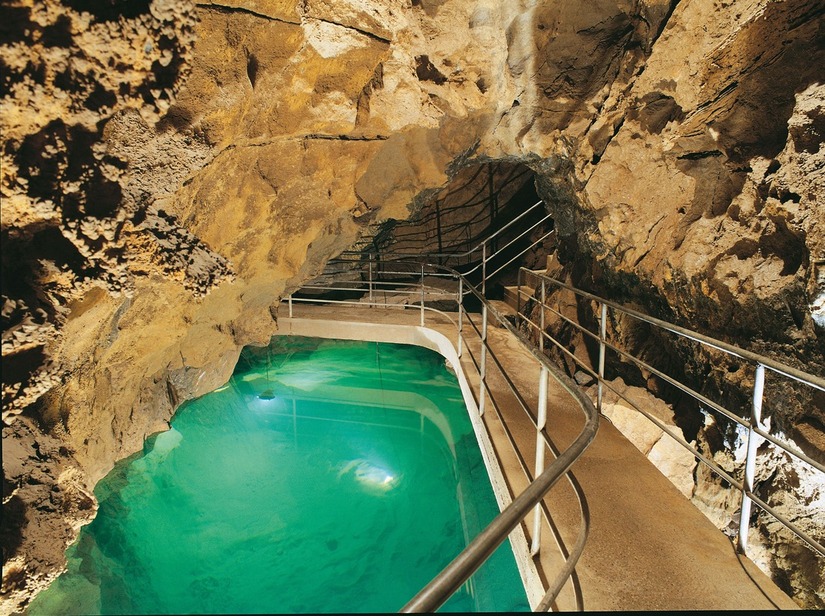
The second goes deeper, showing a completely different environment: here water is still the protagonist, and the landscape tells the cave as it was thousands of years ago, before the formation of stalactites and stalagmites.
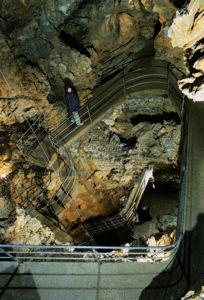
The third itinerary, unique in its genre, is a three-hour journey that takes the visitor to scenarios normally reserved for speleologists: vertical shafts, underground canyons, spectacular environments that are testament to the power of nature in its purest state.
 What really sets the Grotta del Vento apart is the approach. Each visit is guided and grounded on sound science. The guides are trained through a rigorous path, because the goal is not to amaze with evocative images, but to convey knowledge.
Explanations also evolve over time: “It was once thought that the colours of formations were due to iron. Today we know that they derive from organic acids in the soil.” A concrete example of how research continues to redefine what we think we know.
Inside the cave, the temperature is stable, around 10.7°C, a perfect average between summer and winter. But the perception changes: in winter it seems warm, in summer surprisingly cool. A small detail that contributes to making each visit unique.
More than fifty years after the opening, what still drives Vittorio is not only personal satisfaction, but something deeper: the awareness of the importance of the underground world.
Caves hold some of the most precious water reserves on the planet, and their knowledge is crucial for the future. “In 2050, much of the water we will drink will come from karst systems,” he points out.
Spreading speleological culture therefore also means educating on the protection of natural resources.
The Grotta del Vento is not only an attraction, but a cultural and tourist engine for Garfagnana. With around 35,000 visitors a year, it represents an important reference point, but also an incentive to do more.
“A territory must know how to enhance itself,” observes Vittorio. “Events alone are not enough, you need content, identity, vision.”
There is something deeply human about the desire to explore what is hidden. The Grotta del Vento, thanks to the vision of Vittorio Verole Bozzello, is not only a place to visit, but an experience to understand. An invitation to slow down, to listen, to look beyond the surface. Because, sometimes, it is precisely in the darkness that the light of knowledge is found.
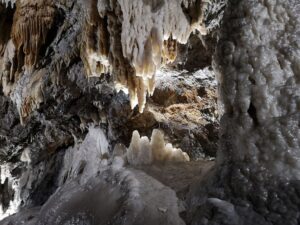
A vivid impression that has remained, over time, in the mind of Michele Giannini, Mayor of Fabbriche di Vergemoli: “I remember my first visit to the Grotta del Vento as a child: an almost mystical impression, that of entering the heart of the earth and discovering a world completely different from the one on the surface. The darkness, silence and fresh air then created a sense of wonder and belonging to something bigger.”
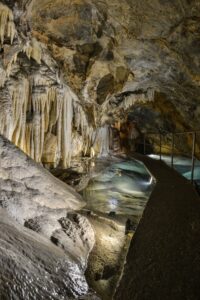
“The Grotta del Vento” – he explains “It represents one of the main points of naturalistic interest in our territory. It is an underground complex of karst origin, with kilometres of underground paths enriched with stalactites, stalagmites and other formations. In addition to its aesthetic beauty, the Cave has great scientific value: it is a natural laboratory for geologists, speleologists and environmental scholars, who can observe unique geomorphological phenomena. It is therefore a place of research, environmental education, as well as emotional wonder”.
“With its scientific and naturalistic attraction” – he concludes – “It generates a constant flow of visitors from all over Italy and abroad, contributing to the induced activities of accommodation facilities, restaurants, small commercial enterprises and tourist services. The presence of visitors also stimulates collateral initiatives, the activity of environmental guides, educational workshops and educational paths, creating employment and training opportunities” “The Grotta teaches humility, slowness and respect for the long times of nature”, in perfect harmony with the traditional spirit of these valleys.
Info: Grotta del Vento, Fornovalasco (Lucca) / Tel. 0583 722024 / info@grottadelvento.com / www.grottadelvento.com